


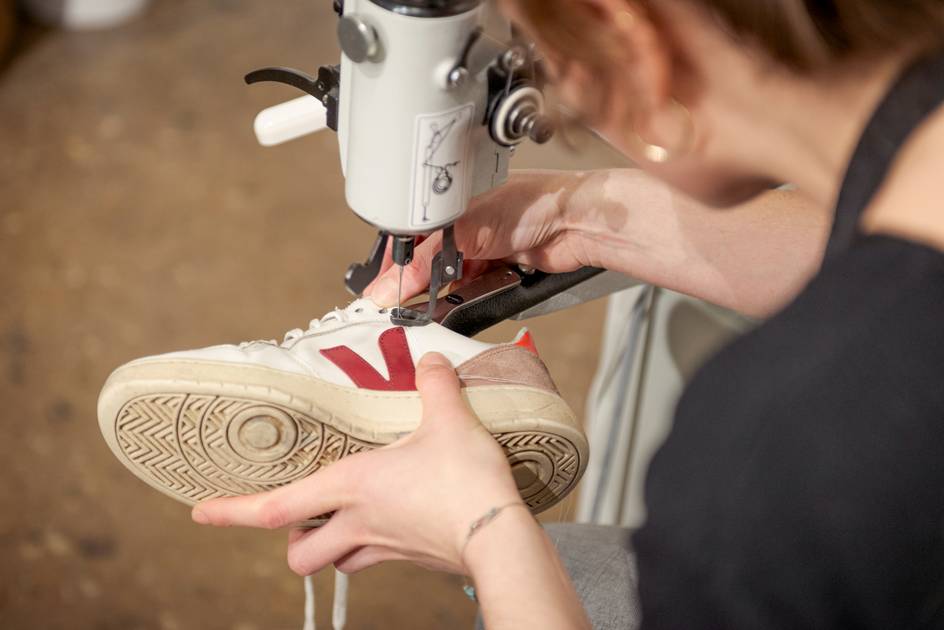
In Roubaix, a new school, the École de la Réparation, is contributing to the revival of traditional expertise in clothing repair. The school responds to the growing demand for fashion education focused on sustainability.
Based in the former textile capital of France, the initiative focuses on teaching repair, retouching and restoration techniques for clothing. It is part of a broader movement to extend the life cycle of products and reduce textile waste. According to the school’s website, this program reflects an overall shift in fashion education toward circular design practices and practical sustainability training.
The return of repair skills in fashion education
For decades, many fashion schools prioritized creation and trends at the expense of repair and maintenance skills. Due to increasing concerns about overproduction and textile waste, trainers and industry organizations are gradually reintroducing repair techniques into their programs.
The school in Roubaix sees repair not only as a technical skill, but also as a cultural and ecological practice. Students learn to repair damaged clothing, understand the structure of textiles and work with existing materials, instead of being solely dependent on the production of new fabrics.
This approach is in line with broader European discussions about circular fashion. Extending the lifespan of products is considered essential to reduce the environmental impact of the clothing industry.
A combination of heritage and future fashion practices
Roubaix’s past as a textile center gives this initiative additional cultural significance. Once the cradle of a thriving manufacturing industry, the city has gradually repositioned itself around creative industries, design education and textile innovation.
By teaching repair and restoration techniques, the program also contributes to the preservation of traditional craftsmanship. This craftsmanship is in danger of disappearing due to the dominance of fast-fashion production models on the global market.
The trainers involved in the project say that future designers need to have a deeper understanding of materials, the sustainability of clothing and its maintenance. This is necessary to design more responsible fashion systems.
Sustainability through practical learning
The school illustrates a growing trend in education: the merging of sustainability theory with the practice of repair and fabrication. Sustainability is not a separate subject, but integrated into the technical training and the work in the workshops. Examples of this include a circular product design course, aimed at redesigning household items for a longer lifespan and better repairability. There is also a textile upcycling workshop where advanced darning techniques are taught to upcycle clothing. In addition, there is a training on renewable energy systems that addresses the ethical sourcing and disposal of materials, as well as installation and maintenance.
As governments, brands and consumers increasingly value the principles of the circular economy, repair education is becoming an increasingly crucial component. It prepares future fashion professionals for the new expectations of the sector.
The initiative in Roubaix shows how fashion education goes beyond just design and production. It now also includes restoration, reuse and long-term product management. These are skills that many educators consider essential for the new generation of designers and artisans.
This article was translated using an artificial intelligence tool and then verified and edited by a journalist from FashionUnited.
FashionUnited uses AI language tools to speed up the translation and proofreading of news articles and improve the end result. This saves our journalists time, which they can spend on research and writing original articles. Articles translated using AI are carefully reviewed by an editor from our team. For questions or comments, please write to us at info@fashionunited.com.
This article has been translated into Dutch using an AI tool.
FashionUnited uses AI language tools to speed up the translation of (news) articles and proofread the translations to improve the end result. This saves our human journalists time that they can spend on research and writing their own articles. Articles translated using AI are checked and edited by a human desk editor before going online. If you have any questions or comments about this process, please email info@fashionunited.com.
