


Brent falls below $71 a barrel amid reports of progress in talks to end the war permanently.

Published On 2 Jul 2026
Oil prices have fallen to levels not seen since the start of the US-Israel war on Iran amid rising hopes for a breakthrough in negotiations aimed at sealing a permanent peace deal.
Brent crude fell more than 1 percent on Thursday to below $71 a barrel, returning the international benchmark to pre-war prices.
Recommended Stories
list of 4 itemsend of list
Brent futures for August delivery stood at $70.82 per barrel as of 04:30 GMT, lower than at any point since February 27, the day before the war began.
Following the latest drop, Brent prices are down more than 38 percent from their post-war peak of more than $126 a barrel on April 30.
The slide came after Qatar, a key mediator between Washington and Tehran, said that US and Iranian officials had made “positive progress” in indirect talks aimed at resolving issues related to their memorandum of understanding (MoU) on ending the war.
US President Donald Trump also cast a positive light on the talks on Wednesday, saying the “denuclearisation of Iran is moving along well”.
Vandana Hari, the founder of the Singapore-based oil market analysis provider Vanda Insights, said a steady uptick in oil flows out of the Gulf and “cautiously optimistic geopolitical sentiment” has driven prices lower.
“Several key issues in the MoU remain unresolved, but the two sides appear to have backed off confrontation on the issue of the interim Hormuz transit regime, at least for the time being,” Hari told Al Jazeera.
“I expect crude to continue grinding lower until the backlog of stranded barrels has cleared, and prices could even swing into oversold territory,” she said.
“The real test of normalisation of Persian Gulf supply will come after that, necessitating fresh supply-demand balance recalibration.”
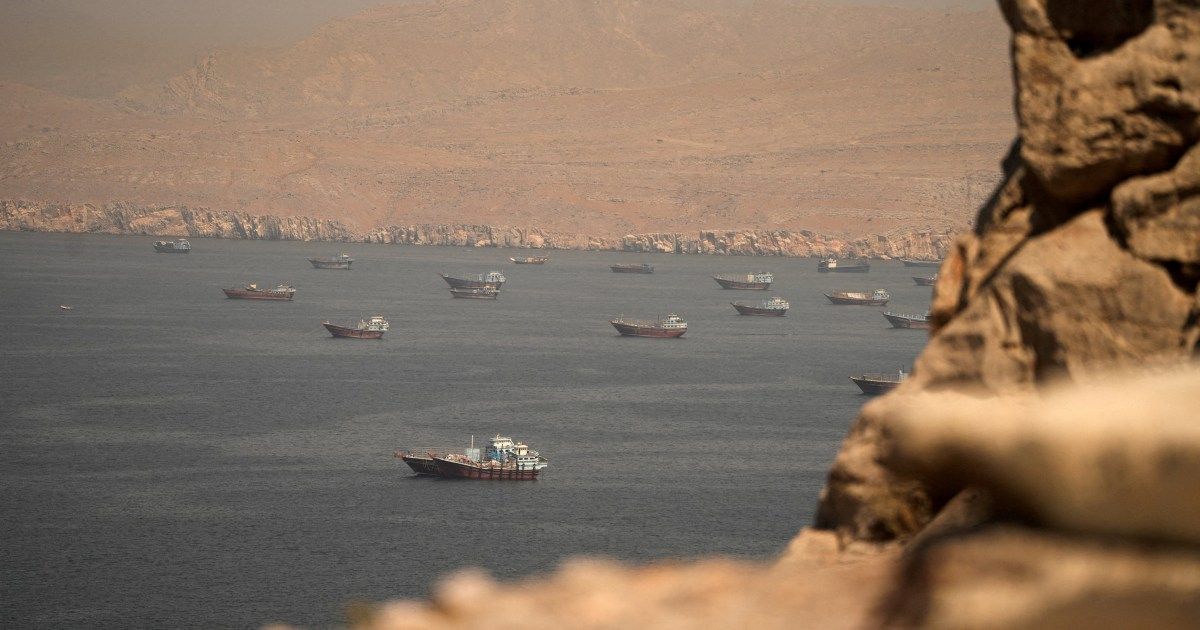
Shipping in the Strait of Hormuz, a conduit for one-fifth of the global trade in oil and liquefied natural gas in peacetime, has shown tentative signs of recovery in recent days after a sharp decline following attacks on two commercial vessels in the waterway on Thursday and Saturday.
At least 40 vessels transited the strait on Tuesday, according to data from MarineTraffic, up from 27 crossings on Monday and 22 on Sunday.
Maritime traffic nonetheless remains far below its pre-war level of roughly 130 daily crossings amid persistent concerns about safety in the waterway.
While Iran agreed to make its “best efforts” to arrange the safe passage of vessels in the MoU it signed with the US on June 17, Tehran has since repeatedly claimed the sole right to control movement through the strait.
At least 49 attacks on commercial vessels have been recorded in the strait since the start of the war, according to MarineTraffic, most of which were claimed by Tehran or blamed on its forces.

Neil Crosby, an oil market analyst at Sparta Commodities in Singapore, said that while Brent’s fall reflects the market’s “partial conviction” that hostilities are largely finished and the recent boost in supply, it is too early to conclude that prices will stay at pre-war levels.
“This is by no means a stable or sustainable situation. Not for the politics, as we can all see. But also not for the state of the oil market itself in terms of supply, demand and trade,” Crosby told Al Jazeera.
“Many large moving parts are in play. Low prices are likely to see global crude importers return to the market and clear the glut over time,” he said.
“So in terms of price, I highly doubt that we are ‘out of the woods’ yet.”
