


The cross-pollination between fashion and interior is not new. From Hermès blankets to Missoni towels and Versace ceramics, luxury brands have been expanding their identity beyond clothing. During this year’s Milan Design Week, in parallel with the 64th edition of Salone del Mobile, that cross-pollination reaches a new level of ambition and visibility.
The relationship between fashion and design is no longer an afterthought or seasonal event. It is a stable presence, anchored in the concept of the Fuorisalone and inseparable from it. The result is an urban program in which the boundaries between disciplines have virtually disappeared.
Loro Piana
At Loro Piana, the house presented “Studies, Chapter I: On the Plaid” at its headquarters in Milan, on Via Moscova. The presentation included twenty-four unique pieces, distinctive in technique, construction and finish. They are crafted from the house’s finest fibers, such as vicuña, baby cashmere and cashmere, in addition to linen and innovative fabrics. Each piece is made exclusively on request. This emphasizes that the materials of a knitwear collection can be applied to interior objects with the same artisanal precision. The pieces were only available to boutique customers, ensuring exclusivity.
At Prada Home there was a limited-edition presentation of Japanese ceramic vases by Taira Kuroki from Kyoto, Shion Tabata from Karuizawa, Yuichi Hirano and Koichi Ohara from Tokoname. The exhibition was curated by Theater Gates. The works are inspired by the tradition of the Chawan, the ceremonial tea bowl from Japan. As a result, the collaboration is as much rooted in craft and ritual as in aesthetics.
Prada’s broader presence at Salone continues. The fifth edition of the annual Prada Frames symposium, curated by Formafantasma, takes place under the title In Sight. Lectures and conversations at Santa Maria delle Grazie explore image-making as a cultural, political and material force.
Moncler x Corso Como 10
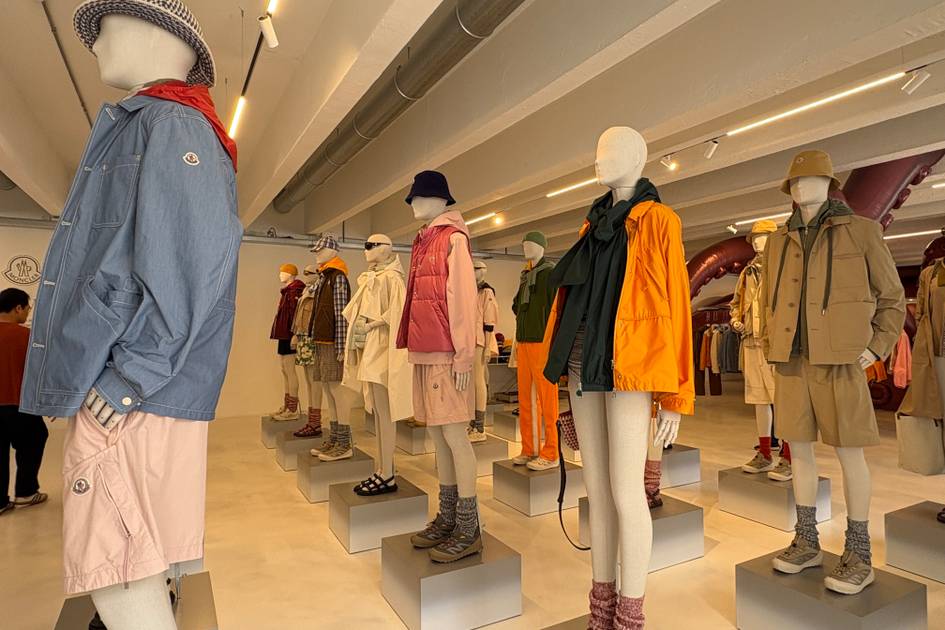
Moncler, meanwhile, takes a more instinctive approach. At ten Corso Como, a giant inflatable octopus envelops the facade of the building. This is a reinterpretation of the brand’s signature puffer aesthetic in an immersive pop-up that combines fashion, installation and retail.
At Issey Miyake, designer Satoshi Kondo converts waste into an architectural concept. The project, titled The Paper Log: Shell and Coreis a collaboration with the Spanish agency Ensamble Studio. The project uses the compressed paper rolls left over from the production of pleated clothing. This gives rise to two possibilities: an intimate and commemorative one, and a structural and functional one. The result is part installation, part prototype and fully in line with Miyake’s belief that process and material are never accidental.
Bottega Veneta, under creative director Louise Trotter, is collaborating with Korean artist Kwangho Lee on Lightful. This is a site-specific installation at the brand’s store on Via Sant’Andrea. The installation features hanging woven structures and light sculptures made from the house’s leather fettuccine strips. Gucci, under Demna, presented Memoria at the Chiostri di San Simpliciano. This is an immersive exhibition that traces the 105-year history of the house through twelve tapestries and a garden installation that reinterprets the Flora motif as a three-dimensional environment. Elsewhere in the city, Hermès, Jil Sander, Saint Laurent, Balenciaga, JW Anderson, Isabel Marant and Chloé also present their work in different ways.
On the more democratic side of the spectrum, Zara organizes Calma, an immersive installation in the neoclassical Palazzina Appiani in Parco Sempione. It is a soothing, sensory experience, intended as a refuge from the energy of the week. Meanwhile, H&M has announced a new collaboration with American architect and designer Kelly Wearstler, adding another fashion-to-interior collaboration to an already busy calendar.
Design democracy
The atmosphere at Salone is noticeably different than during fashion week. Where the catwalk shows are transactional, built around orders, press and commercial momentum, Fuorisalone is looser and more relaxed, without the fashion drama. Most events require no more than a QR code for entry. As one creative director of a luxury house put it: “It’s more democratic and a lot more fun.”
That openness is exactly what makes the week increasingly central to the communication of fashion brands. Without sales targets and critical reviews, Milan Design Week has become the place where houses can say something about how they think, not just what they make and sell.
This article has been translated into Dutch using an AI tool.
FashionUnited uses AI language tools to speed up the translation of (news) articles and proofread the translations to improve the end result. This saves our human journalists time that they can spend on research and writing their own articles. Articles translated using AI are checked and edited by a human desk editor before going online. If you have any questions or comments about this process, please email info@fashionunited.com.
