


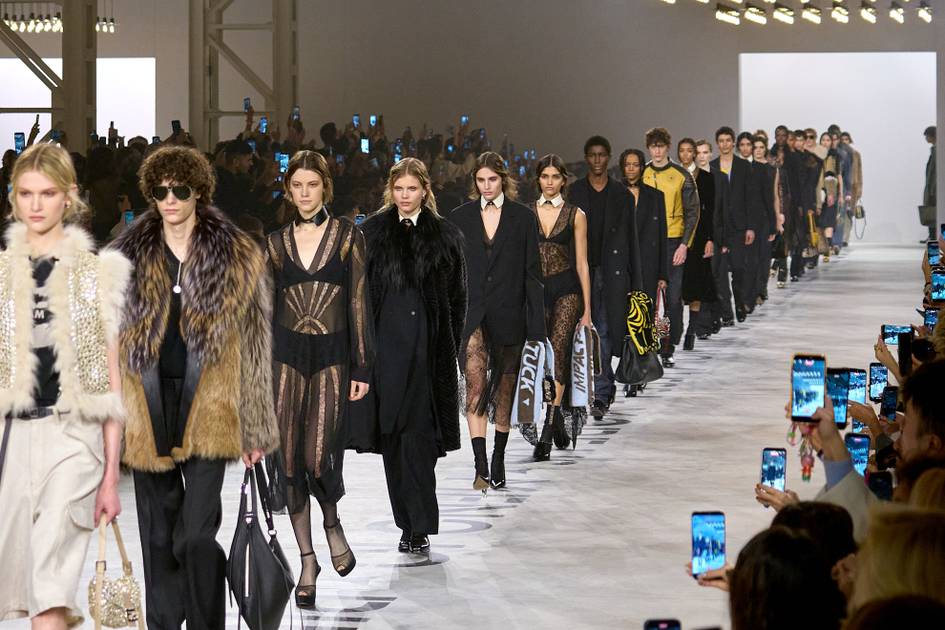
The organization of Milan Fashion Week invites fashion brands to avoid fur in their shows. This turning point follows long discussions with NGOs.
Milano Fashion Week’s new “guidelines” voluntarily invite brands not to present “clothing, accessories or other items containing fur” at their shows, the Camera Nazionale della Moda Italiana (CNMI) said in a statement.
Milan is carefully following in the footsteps of the fashion weeks of London and New York, which decided to ban fur a few years ago. At the same time, Italy has banned the farming of animals for their fur since 2022, as have France since 2021 and the United Kingdom since 2003.
The use of fur in the global fashion industry has declined sharply in recent years. This is due to concerns about animal welfare, changing trends and the emergence of new synthetic alternatives. Paradoxically, these developments have also brought fur back into fashion.
Activists regularly protest during the four Milan fashion weeks (spring/summer, autumn/winter, men’s and women’s) demanding that brands ban fur.
“This initiative confirms the CNMI’s determination to take a conscious and balanced approach to the evolution of the fashion industry, in line with our already implemented strategies,” said Carlo Capasa, President of the CNMI.
For Emma Håkansson, director of the Fashion Justice collective, one of the three NGOs that were in discussions with the CNMI, this announcement is “a historic step for the Italian fashion industry, marking a change in direction from the unethical and unsustainable use of fur.”
“Without a complete ban on fur, it is not guaranteed that cruelty will be eradicated from Milan’s catwalks. However, we hope that this anti-fur declaration will encourage the use of beautiful and responsible, new-generation biomaterials. We look forward to continuing our collaboration with the CNMI to better protect vulnerable animals that do not exist to become clothing,” the activist continued in a statement.
The Milanese giants Armani, Prada and Dolce & Gabbana no longer use fur. There remain some notable exceptions in the Italian luxury landscape, such as Fendi. This famous fashion house, owned by the French group LVMH, has a history closely linked to fur.
This article has been translated into Dutch using an AI tool.
FashionUnited uses AI language tools to speed up the translation of (news) articles and proofread the translations to improve the end result. This saves our human journalists time that they can spend on research and writing their own articles. Articles translated using AI are checked and edited by a human desk editor before going online. If you have any questions or comments about this process, please email info@fashionunited.com.
