


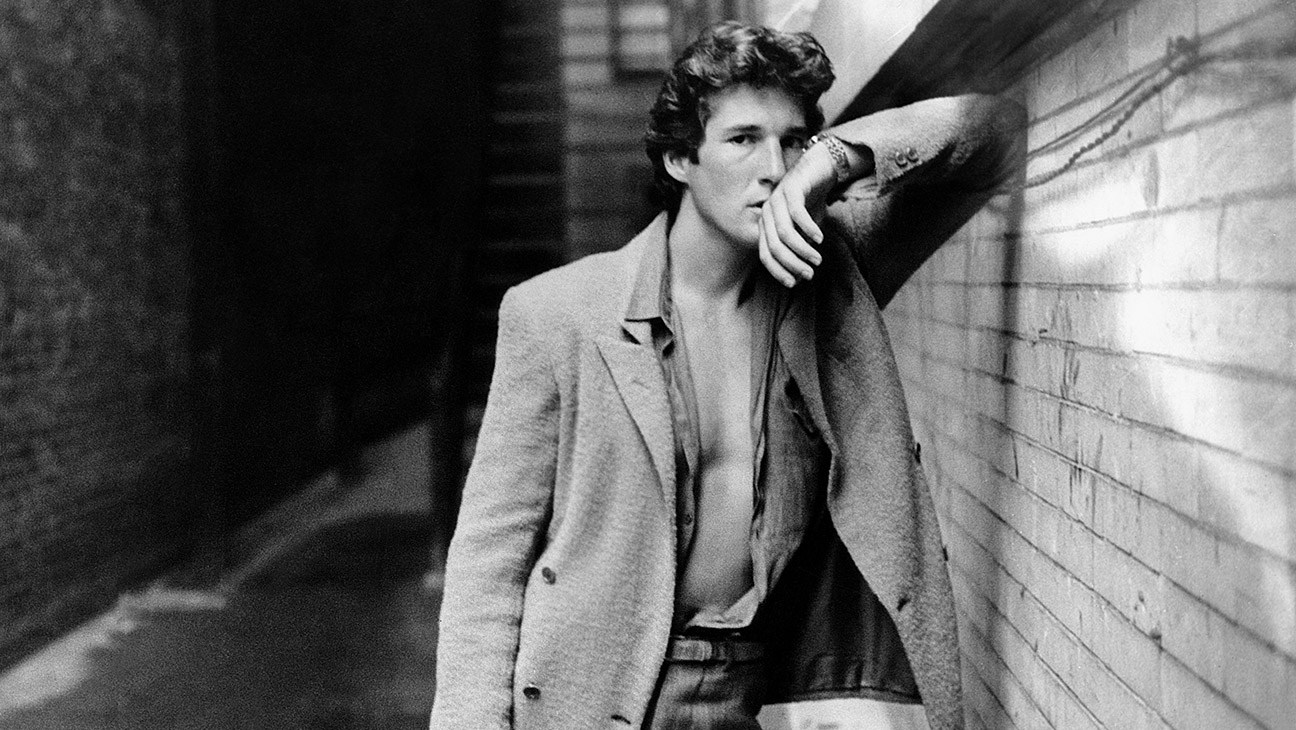
When the White House was looking for a way to attack Richard Gere this summer, they went low. Very low — even for this administration.
Gere, the politically active 77-year-old actor and philanthropist, had criticized President Trump’s “ignorance” for cuts to the U.S. Agency for International Development. At an event promoting an educational partnership on migration, Gere remarked, “He has idiots around him.”
Steven Cheung, the White House communications director, fired back in a July 21 post on X, “Not going to listen to a guy who may have put a gerbil up his ass.”
And there it was.
Again!
That those in Trump’s orbit would traffic in the tawdry is hardly news. But the choice of this particular angle of attack reveals the almost supernatural staying power of a rumor, or urban legend, that started roughly four decades ago.
I was not surprised to see the White House post. Nothing about the gerbil rumor, not its longevity nor its continued impact, surprises me. You see, I have been investigating everything about it for six years. The Hollywood Reporter is releasing the first two episodes of my podcast series, Gerbil, on Sept. 17, and installments will be released weekly on Thursdays after that.
The gerbil legend may be the most essential rumor in Hollywood history because it perfectly reveals how the products of the entertainment industry, deliberately and, more importantly, accidentally, express fears, yearnings, nightmares and dreams that worm themselves eternally into our brains.
Or, as Stanford communications professor Fred Turner told me, “This is Richard Gere, an American icon. And so in some sense, the gerbil is not just up Richard Gere’s ass, it’s up America’s ass.”

Comedian Sam Kinison, among the first to refer to the story in his act.
John Atashian/Getty Images
The basic version of the rumor — and it is a rumor, not something for which proof has been publicly produced — is that sometime in the 1980s, Richard Gere showed up at the emergency room of Cedars-Sinai Medical Center in Los Angeles with a gerbil lodged in his rectum that he had inserted for sexual pleasure. Somehow this unsubstantiated story became internationally known with almost no major media explicitly reporting it, and before the modern version of the internet. Barely a decade after the word “meme” was coined to refer to things or ideas that can be imitated and culturally transmitted, and before the concept of memes going “viral” had become known outside academia, the gerbil rumor caught on and caught fire.
The first stand-up comedian to ever mention Gere and a gerbil in his act appears to be the late Sam Kinison, who was already noticing how widely it had spread in May 1990. At a Las Vegas show, Kinison’s bit went, “I hope it’s a rumor. I was in Miami last night, the fucking crowd there went nuts. Everybody in the country knows supposedly because … I don’t want to get in trouble, but supposedly — supposedly — I guess he was in the hospital. … How good could this fucking feel?”
Calling it a rumor is a kind of shorthand because the gerbil thing is far more than simple gossip about, say, who is dating whom. Jan Harold Brunvand, author of numerous books cataloging urban legends, considered the gerbil rumor “modern folklore.” Brunvand noted that Nobel Prize novelist Gabriel García Márquez was fascinated with trying to discover the origins of what he called “lost stories,” often untraceable tales that keep evolving new details such as one about the man who supposedly discovered a large diamond in the stomach of a fish he caught. Or was it a person who found a gold ring in their order of fried chicken? Or a Bible story about a fish with a coin in its mouth?
When exactly the gerbil story started is one of the mysteries I aimed to solve. It also has many variants — although none in the Old Testament. (But maybe in Freud!) Some versions mention the use of a cardboard paper towel roll to guide the gerbil inside. Others insist duct tape or condoms were tools. Still others say the ER visit happened at St. Vincent’s in New York or Hollywood Presbyterian. The gerbil is freed and runs around the ER. The gerbil dies and somewhere are X-rays showing it. It’s not Gere, it’s some other celebrity.
A reply from the NSA to the author’s Freedom of Information Act request seeking information on the gerbil hearsay.
Courtesy
To save you a trip, your AI machine will tell you the Gere gerbil rumor isn’t true. But this is part of what drew me to the story. The machines only know what they can search: digitized magazine articles, Reddit threads and fact-checking sites. I decided to figure out what, if anything, might be true about it and why this particular rumor never seems to die. As an investigator, it was my duty to explore the possibility that he did what people said he did. But even if Gere did not do the deed, what might be learned from the undeniable existence of the urban legend?
I used old-school journalism. I interviewed doctors, film directors, actors, talent agents, nurses, would-be witnesses, reporters and many others who were there when the story started. I traced everything that had been written, much of it nondigital, dating back to the story’s murky origins. I studied emergency room records, police reports, criminal case files and filed Freedom of Information Act requests.
No one had done this thorough a job to trace the legend’s origins and find out what is true and what is demonstrably false about it — and, more importantly, why the damn thing has outlasted nearly every other gossip item in the history of Hollywood.
It has been said that we are living in a “post-truth era,” where people decide what is real based not on facts but on how they feel about an idea. Into this factual breach rush memes that reflect ideas of how the world works, ideas that exhibit what Stephen Colbert called “truthiness” rather than truth.
As I was starting the project, I would say the word “gerbil” to anyone I met and record their reactions. One person free-associated revealingly that the idea that celebrities are engaged in weird sexual stuff just feels true. “There’s a sinister underbelly to what really goes on in Hollywood,” they said.
Not only does the weirdness make sense to outsiders who assume celebrities are not just like us, the details are so odd, it seems no one could ever make this stuff up, so it must be true. “Conspiracy theories are renowned for making a kind of sense that appeals far more than the truth,” says Susan Blackmore, author of the influential 1999 book The Meme Machine.
You don’t have to be over 40 to know the rumor is still everywhere. When the gossip merchant known as Deuxmoi appeared on the Taste of Taylor podcast in November 2024, host Taylor Strecker gushed, “Like the first-ever celebrity conspiracy theory is that [Gere] used to shave gerbils, inject them with cocaine, put Vaseline on them and stick them up his butt. And use them as little vibrators …”
The anonymous representative of Deuxmoi replied, “I’ve had people message me and be like, ‘My mom’s friend is a nurse, and he really did come in’ … I think people started to believe it for real. … I don’t believe it, but if I have enough glasses of wine, I might, like, start to believe it.”
Young, old or whatever, you could also have heard recent tell of the gerbil legend in one form or another on the podcasts of Joe Rogan, Tig Notaro and Mae Martin, Dax Shepard, and Conan O’Brien; on Family Guy, South Park, Curb Your Enthusiasm and Family Feud; on TikTok posts that garner hundreds of thousands of views, on Lady Bunny’s Instagram feed, and on Tom Green’s recent stand-up special. I could go on.
Lemmiwinks the Gerbil, a character inspired by the Gere rumor, on South Park.
Courtesy
Why has it lasted? When exactly did it start? Why did it start? Perhaps most importantly as a service both to a country weary of lies and to the widely beloved Richard Gere, is there any chance it’s true, and if it’s not true, is there any way to stop it?
I took on this project not to dredge something prurient up, but because it actually struck me as important. Mike Rothschild, who has written books about QAnon and antisemitic conspiracy theories, says that he is sometimes criticized for platforming these things. But he believes that the only way to fight them is by reporting whatever truth can be found. If you believe that truth matters, and that a journalist’s job is to fight lies wherever they arise, you have to ask questions of these theories, rather than being baited into easy criticisms that don’t work to stop conspiracy theories.
“So much of it is just the weirdness and the salaciousness and the pointing and laughing,” Rothschild says, “rather than really trying to develop a deeper understanding of the psychological forces behind these movements. Because psychological forces don’t get clicks. Pointing and laughing at weirdos waiting for JFK Jr. to come back gets clicks.”
Cedars-Sinai Medical Center in Los Angeles, the setting of most renditions of the tenacious gerbil rumor.
Myung J. Chun/Los Angeles Times/Getty Images
This is the essence of the gerbil investigation. What psychological forces gave rise to all this in its moment and why does the gerbil persist? To paraphrase the great poem: What rough beast, its hour come round, slouched toward Cedars-Sinai to be born?
There is little doubt that the gerbil rumor was a form of homophobia. Gere’s early image in films like American Gigolo and plays like Bent, and his reluctance to be interviewed about anything personal, left people wondering about his sexuality. And the death of Rock Hudson from AIDS in 1985 left the public skeptical about which stars in Hollywood were telling the truth about their preferences.
This is part of how Hollywood helped make the gerbil legend, shaping stars to deliver fantasies but telling lies along the way. (There’s more. I’m not spoiling the whole series for the sake of this little article!)
In a time now when memes like the Coldplay couple or some celebrity’s too-thin thighs run across your screen only to be overwhelmed by the next hourly outrage or craze, the gerbil rumor comes from a slower time and thus can be slowly examined, its rise teased apart, its makers and its impacts exposed, its truths revealed.
The rumor was never harmless. In a pioneering early 1990s academic study of the rumor, ethnographer Norine Dresser reported on an 11-year-old girl telling her that she heard the Gere rumor on the playground and believed it to be true.
Rock Hudson, then 29, and his new bride, Phyllis Gates, 25, in 1955. The death of the actor from AIDS in 1985 left the public skeptical about which stars in Hollywood were telling the truth about their preferences.
Bettmann/Getty Images
Dresser noted that, “Through the acceptance of this legend as truth, the children are internalizing a stigma that will be difficult to destroy. As they grow older and learn more about homosexuality, it will remain linked with lurid bestial behavior. As a result, when these children go through their own sexual awareness and ambivalence, these ideas will remain forever connected, and their own self-images and development may conceivably be damaged.”
The 11-year-old in 1993 is 44 now.
There is no way Gere could have had any idea the rumor would go as far and last as long as it has. As the years have gone on and his hair has whitened, Gere has become nearly as famous for his charity and his spirituality as his acting. As I’ve dug deeper, I’ve come to believe he might be convinced to see that the gerbil rumor, which has bedeviled him for so long — and my reporting shows it has bothered him — could become a tool for enlightenment.
Too grand? After six years on this story, I can tell you the gerbil legend has become my teacher, and I think it can help all of us.
My initial request to speak to Gere was denied. “Due to his schedule at this time, Mr. Gere will be unable to participate,” emailed a representative for Gere.
The most cogent comments he ever made about the rumor were in a 1991 television interview with Barbara Walters. She asked, “Do you have any idea why anyone would want to hurt you, or embarrass you, or try to smear you?”
After some back-and-forth, Gere said, “Does any of this bother me personally? No. People have their own motivations for doing crazy things, you know, and it has nothing to do with me. You know, if I’m a cow and someone says I’m a zebra, it doesn’t make me a zebra.”
I expect that as the episodes roll out and Gere and his people have a chance to hear what I’m up to — an attempt, finally, to bring the full truth to bear on the rumor — I will get a call from them. As Tom Hanks did by coming on the podcast Dead Eyes to unravel an old mystery about him, I expect Gere will see this project as something that is of service. Perhaps if, instead of pretending that it has not hurt him, he speaks movingly about the fact that it has, that this is not a victimless little joke, something else new and true will be brought to the story.
You’ll have to listen to find out if that’s how it turns out.
This story appeared in the Sept. 9 issue of The Hollywood Reporter magazine. Click here to subscribe.
