


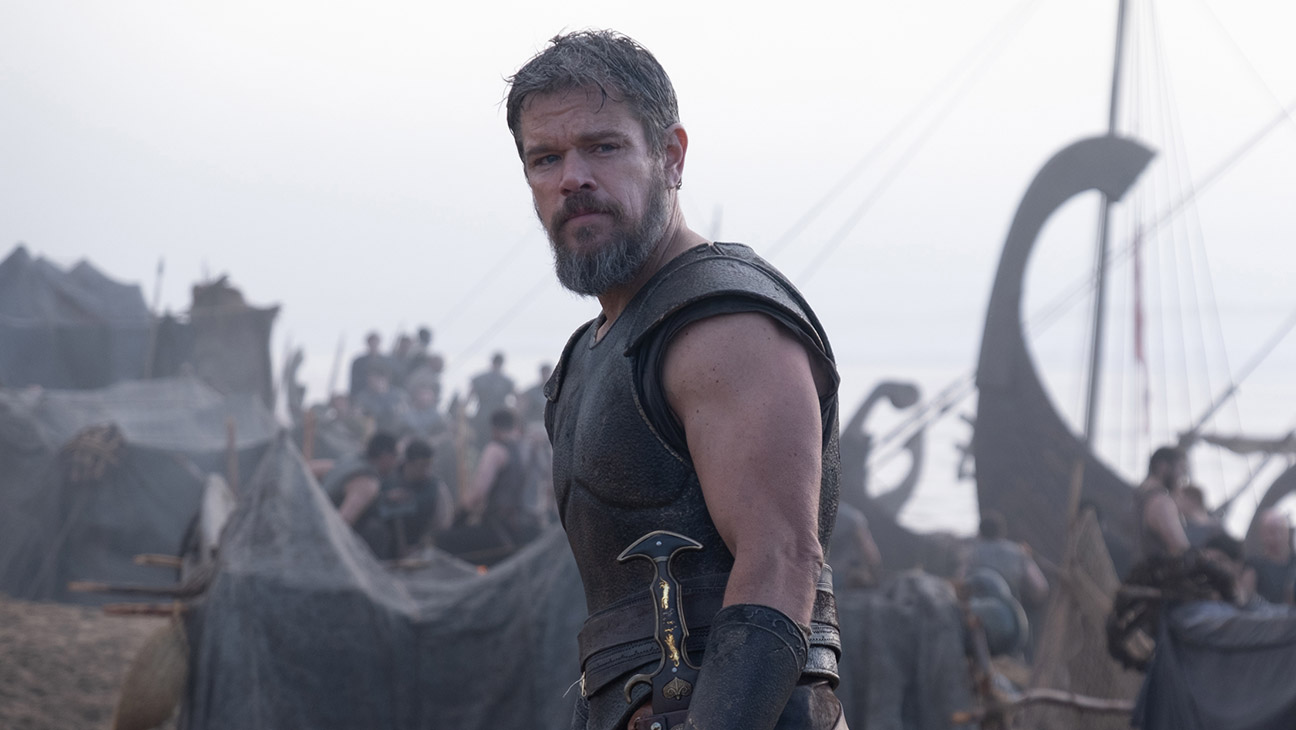
Christopher Nolan reportedly “grimaces” when told Matt Damon‘s viral quote about making The Odyssey and what it meant for cinema’s future.
The Oscar-winning director was being interviewed about his mythological epic, which is open this week, when The Telegraph asked about a recent comment by his film’s leading man.
Damon had said he had a nostalgic feeling while making the epic feature “because it felt like the movies when I started working — and I know that that’s going away.” The actor added, “I knew that this was the last chance I was going to have to do something like this” and “I don’t think people are going to be given the resources to shoot movies that way for much longer.”
But Nolan — who is also currently serving as the president of the Directors Guild of America — had a different take.
“I think I know what [Damon] was driving at, because it does seem like a long time since somebody made a film like this in this type of way, where you travel the world, get together a cast of thousands and so on,” Nolan said. “But there’s a defeatist aspect of viewing it that way that I don’t agree with. I think cinema is vital and essential and continues to transform itself — we’ve got all these great new young voices in movies, making the medium their own and moving it forward.”
Nolan referenced Obsession writer-director Curry Barker and Backrooms director Kane Parsons as examples of original Gen Z filmmakers making a splash at the box office.
“This is why I never bought into the arguments that young audiences’ attention spans are too fried to enjoy a three-hour Greek epic,” Nolan said. “Those films are so mysterious and ruminative. I mean, parts of Backrooms are like David Lynch at his most obscure. And yet young people can’t get enough of them.”
Nolan is certainly correct about young audiences enthusiastically showing up at theaters to support fresh voices and original ideas. Still, Obsession and Backrooms were low-budget sensations. Damon’s contention that studios are increasingly reluctant to fund massive productions that rely heavily on practical effects and on-location filming to tell a non-franchise story certainly seems correct as well — unless you’re a major proven-draw filmmaker like Nolan coming off the surprise $1 billion box office for an original idea like Oppenheimer.
Nolan added that he was particularly pleased by Barker and Parsons’ embrace of practical effects, which also reflects why he isn’t worried about AI taking over Hollywood jobs.
“I’ve never seen a more rapid wholesale dismissal of a supposedly foundational jump in technology in my lifetime,” Nolan said of AI. “So much energy has been expended on bringing in AI, but if you look at that generation’s reaction, they’re utterly rejecting it.”
Nolan noted his four children’s attitudes towards AI as evidence that younger generations tend to reject the technology when it comes to visual storytelling. “Their judgment of AI slop has been immediate and harsh,” he noted. “They see it for what it is very quickly – and it’s much easier for them to identify it, because it grew out of an online world they know really well. And while that doesn’t mean that every aspect of the technology is useless or meaningless, in film-making it’s hitting at exactly the wrong time. After years of driving towards heavily virtual environments, we’re seeing a renewed interest in more tactile, more real forms of storytelling.”
Nolan also recently addressed the right-wing culture-war backlash against the film.
The epic stars Matt Damon as Odysseus, whose long journey home to Ithaca after the Trojan War reunites him with his wife, Penelope (Anne Hathaway), and son, Telemachus (Tom Holland). The cast also includes Zendaya, Robert Pattinson, Lupita Nyong’o, Jon Bernthal, Travis Scott, Charlize Theron, among others.
The Odyssey arrives in theaters July 17.
