


By Faisal Islam & Daniel Thomas, BBC News
Rachel Reeves has promised to “get Britain building again” by bringing back compulsory housebuilding targets as part of a wide-ranging plan to reboot the UK economy.
In her first speech as chancellor, Ms Reeves also said she would overhaul planning restrictions and end the effective ban on onshore wind farms in England in order to speed up national infrastructure projects.
She said the government would make the “tough” and “hard choices” to fix the economy, adding that the UK had lagged behind other developed nations for years.
She confirmed Labour planned to build 1.5 million homes in England over the course of this parliament, but said it was not a “green light” to any kind of housing development.
“The question is not whether we want growth, but how strong is our resolve? How prepared are we to make the hard choices and face down the vested interests?” she said.
Former Bank of England economist Ms Reeves was appointed chancellor on Friday, after Labour’s landslide election win.
She and her team worked through the weekend on the speech to business leaders and investors who have held back on investment in Britain in recent years amid the political chaos of the post-Brexit years and the Liz Truss mini-budget.
It is hoped her plans will unleash tens of billions of pounds of investment in green industry and housebuilding.
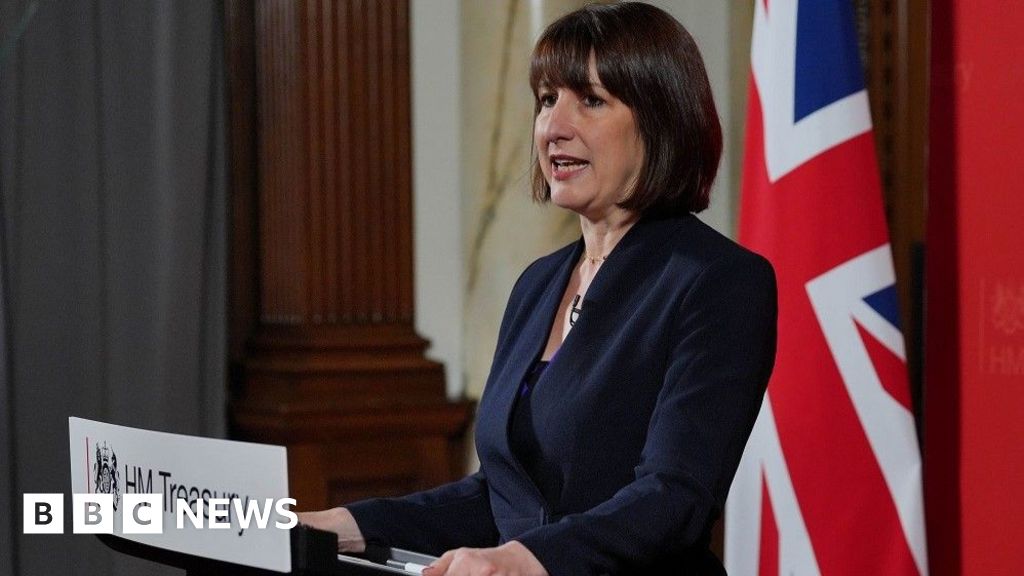
Speaking to business leaders at the Treasury, Ms Reeves said:
- Planning decisions for major infrastructure projects in Britain will be made nationally rather than locally in an attempt to stop important projects becoming tied up in years of red tape
- Green belt boundaries will be reviewed to prioritise brownfield and so-called “grey belt” land, which are poor-quality areas in the green belt such as disused car parks or areas of wasteland
- The transport and energy secretaries will prioritise decisions on infrastructure projects that have been “sitting unresolved for far too long”
- Additional planning officers will be recruited to speed up the planning process
- An assessment of the country’s public finances has been ordered and the results will be presented before parliament’s summer break, before a full Budget is held later in the year
Ms Reeves said that under the plans, the “right mix” of affordable housing and homes for social rent would be built.
Deputy Prime Minister Angela Rayner will oversee this, taking an “interventionist approach” to make it happen, she added.
Labour will also overturn rules brought in by the Tories in 2015 which effectively meant that a very small number of objections could block new onshore wind projects.
It should lead to hundreds of new turbines being built, but Ms Reeves conceded that there would be opposition to her infrastructure plans.
“I’m not naive to that, and we must acknowledge that trade-offs always exist,” she said.
“Any development may have environmental consequences, place pressure on services and rouse voices of local opposition, but we will not succumb to a status quo which responds to the existence of trade-offs by always saying no.”


Proponents of compulsory housebuilding targets say they are necessary to make sure councils build the number of houses required.
Opponents, though, say the mandatory approach has been tried unsuccessfully for decades and it risks forcing development on greenfield sites against the wishes of locals.
The Conservative government under Boris Johnson set targets for housebuilding in 2019, but these were ditched when Rishi Sunak became prime minister amid objections from Conservative Party members.
Last year his government nevertheless estimated that it had built one million new homes in the last five years.
In the absence for now of a surge of public money, Labour will need the private sector to deliver its homebuilding plans.
Trade group the Home Builders Federation called for more support for people to get on to the housing ladder.
“It’s the first time in decades we’ve not had a government support scheme in place for first-time buyers,” said spokesman Steve Turner. “So we need to be helping people on to the property ladder, as well as sorting the planning out.”
Roger Mortlock, chief executive of the CPRE, the countryside charity, said building on the green belt was not the answer.
“The idea that the green belt hasn’t been touched [under] the last government is not true – around six to 10,000 homes a year have been built on greenfield sites in the greenbelt since 2009,” he said.
“Very often what they’re creating are car-dependent communities, pock-marking the green belt, not delivering anything for the people living there.”
Ms Reeves and new Prime Minister Keir Starmer have pledged to boost growth in the economy to help fund increased spending on public services, but they have also promised not to raise income tax, national insurance or VAT.
She also made a pitch to investors who might have avoided the UK in recent years by promising stability.
“After 14 years, Britain has a stable government – a government that respects business, wants to partner with business and is open for business,” she said.
“In an uncertain world, Britain is a place to do business.”
