


The next World Cup will be co-hosted by the United States, Canada and Mexico and will be held from June 11 to July 19, 2026.
This will be the first time the tournament will feature 48 teams, up from the previous 32 teams, meaning there will be more games than ever – 104 in total.
The game is still quite some time away so ticket details are scarce, but here’s what we know so far.
Where is the competition?
The World Cup will be held in 16 cities across three countries, more than any previous tournament.
Three of the locations are in Mexico: Monterrey, Guadalajara and Mexico City.
The other two are on either side of Canada: Vancouver and Toronto.
The remaining 11 are in the United States: Miami, Boston, San Francisco, Seattle, Philadelphia, Los Angeles, Atlanta, Houston, Kansas City, Dallas and New York City.
This list in the United States gives the closest major cities to each stadium. Some venues are located in lesser-known nearby settlements, such as New York’s East Rutherford, New Jersey, and San Francisco’s Santa Clara.

Akron Stadium in Zapopan, Mexico (Sergio Navarrete/Getty Images)
How does the tournament work?
Since 1998, the World Cup has featured 32 teams, creating a neat symmetry, but this edition’s larger scale, with 48 teams, means a more complex format is needed.
The tournament used to have eight groups of four teams, with each country playing each other once. The top two teams in each group advance to four knockout stages: round of 16, quarter-finals, semi-finals and final.
The United States, Canada and Mexico are automatically eligible. The remaining 45 places will be filled through qualifiers held on each continent.
In 2026, there will still be 4 teams in the group, and the top two will still advance to the next stage, but the group stage will be changed from 8 groups to 12 groups.
The best eight third-placed teams out of the 12 teams in the group will also advance, similar to the European Championship (with 24 teams).
32 teams will advance to the knockout stages, which means there will be additional knockout matches before the competition will continue from the last 16 as in previous tournaments.
Where are the biggest games?
The United States, Canada and Mexico will play three group games in their home countries.
Mexico City’s Azteca Stadium, which hosted the 1970 and 1986 World Cup finals, will host the opening game of this tournament. The United States will host a total of 78 games, while Canada and Mexico will host 13 games each.
All quarter-finals and semi-finals, as well as the final, will be held in the United States. The quarterfinals will be held in Boston, Los Angeles, Miami and Kansas City, and the semifinals will be held in Dallas and Atlanta.
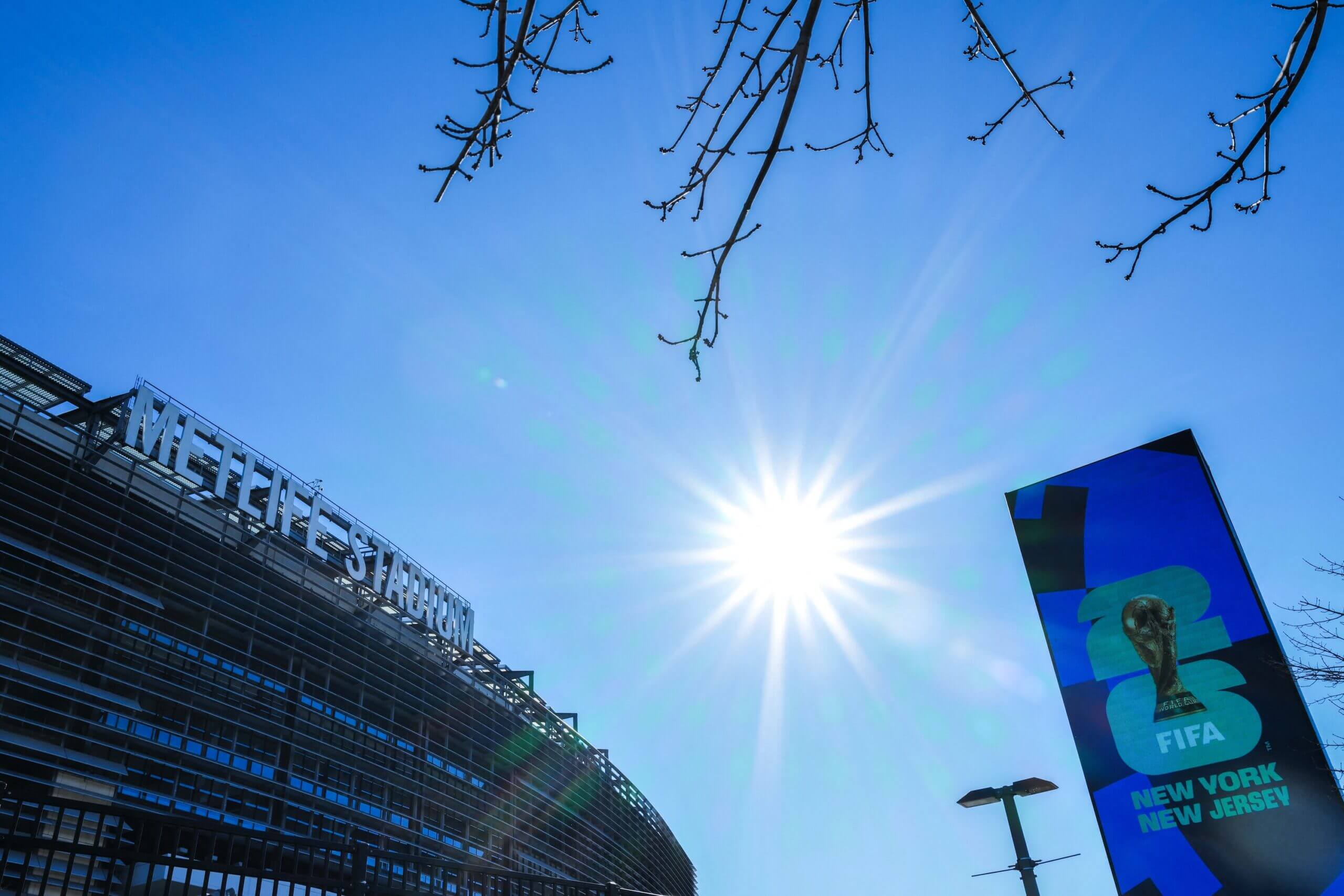
The 23rd World Cup final will be held on July 19, 2026 at MetLife Stadium in East Rutherford, New Jersey, a suburb of New York City.
The stadiums are divided into three zones: west, center and east to minimize fan travel. However, distances within the region are vast, with Kansas City and Mexico City (1,385 miles apart) in the same region, as are Toronto and Miami (1,239 miles apart).

(Yuki Iwamura/AFP Getty Images)
Are tickets available?
No.
With the tournament still more than two years away, there is little public information about tickets.
A page on FIFA’s website simply allows people to register their details to receive information about tickets when they become available. Competitor Event organizers were contacted for comment.
How will the ticketing process work?
We don’t know for sure, but looking at previous World Cups and similar events like the European Championships, we can make some educated guesses.
Tickets for major tournaments basically fall into three categories.
First, tickets are allocated to member associations – two countries that play against each other in a specific match. These are usually given to supporters based on loyalty, such as points earned by following the national team in qualifying matches.
The ease of obtaining these items varies from country to country – for the host country, they are in high demand, but for countries that are far away and have fewer tourists, they are easier to find.
The second category is tickets issued to sponsors and other members of what FIFA likes to call the “football family”.
This doesn’t just mean VIPs in a gorgeous hospitality box. Last year’s Champions League final in Istanbul saw only around 40,000 fans from Manchester City and Inter Milan. The remaining $35,000 was donated to sponsors and various other people associated with UEFA. A small portion of that may make its way into the hands of casual fans through tickets and giveaways.
As the tournament progresses and the games become more exciting, the demand from sponsors and other “neutral” supporters increases.
The third is the rest. The tickets are available to the public for purchase without membership of any national loyalty scheme or membership of the football family.
How will these general sale tickets be distributed?
We don’t know for sure, but look at how Germany, the host of this summer’s Euros, allocates tickets.
Voting is divided into two phases and people can choose to buy multiple tickets in four different categories. Cheaper tickets are usually in higher demand, so it may be easier to get tickets by participating in the more expensive categories.
UEFA has yet to announce details of further ticket sales. Still, there will likely be a limited number of tickets on general sale between now and games starting in June, most likely for games involving less glamorous teams in larger stadiums.
Ticket demand in Germany is very high for a number of reasons.

(Rob Pinney/Getty Images)
Firstly, watching live football matches is an important part of German culture, so demand among locals is high.
Secondly, this tournament is the only European Championship or World Cup to be held in Western Europe between 2016 and 2028, with the exception of Euro 2020, which was held across the continent but travel was severely restricted by the COVID-19 epidemic.
This means there are a lot of fans across Europe who want tickets for the German team.
It remains to be seen how strong demand will be for the 2026 World Cup, especially in cities not typically associated with soccer like Kansas City and Houston, but things are changing quickly in the United States on that front.
How much do World Cup tickets cost?
We don’t know yet, but we can look at precedent.
It’s often difficult to give a clear answer to this question, as event organizers often sell tickets at low prices when in reality these tickets are difficult to come by and most fans pay much more.
A 2022 analysis by German sports consultancy Keller Sports found the average ticket price for the World Cup in Qatar was £286, rising to £684 for the final. This is a 46% increase from the 2018 Russian Championship.
Excluding restricted view tickets and special category tickets open only to Qatari nationals, group stage ticket prices range from 40 riyals ($11) to 800 riyals ($213).
Ticket prices rose steadily as the game progressed, with final ticket prices ranging from 750 riyals ($200) to 5,850 riyals ($1,560).
Tickets may also be available on secondary resale sites, where the price may be significantly higher.
There are often risks associated with using such platforms in Europe, with football organizations not working with them due to ingrained cultural norms and high ticket prices.
But in the United States, this taboo does not exist. If you have $10,000 to spare, you can buy Super Bowl tickets through reliable dealers.
It remains to be seen which approach the World Cup will take.
How much do ticket prices compare to the Super Bowl and other major events?
The cheapest tickets for this year’s Super Bowl sold directly by the NFL have a face value of about $2,000, far higher than the face value of any major football game.
Tickets change hands on the secondary market for about five times that price.
Tickets for the final will likely reach similarly eye-popping prices, but if you’re not too picky about which game to go to, you’ll likely be able to score tickets to earlier World Cup games at more affordable prices.
Can I watch every World Cup match?
Football YouTuber Theo Ogden (aka Thogden) has watched every match of the 2022 Qatar World Cup, the first person in history to do so at the tournament.
This is possible due to Qatar’s small geographical size, although he did have to miss half of a few games to play in their entirety.
But in 2026, absolutely no one will be able to repeat the same feat.
From June 11th to June 27th, in a crazy 17 days, the entire group stage will be completed-all 72 games. The final four days will feature six games each day, covering the entire North American continent.
Because of the vast distances between stadiums, fans must plan their matches carefully.
(Top photo: Charly Triballeau/AFP via Getty Images)
