


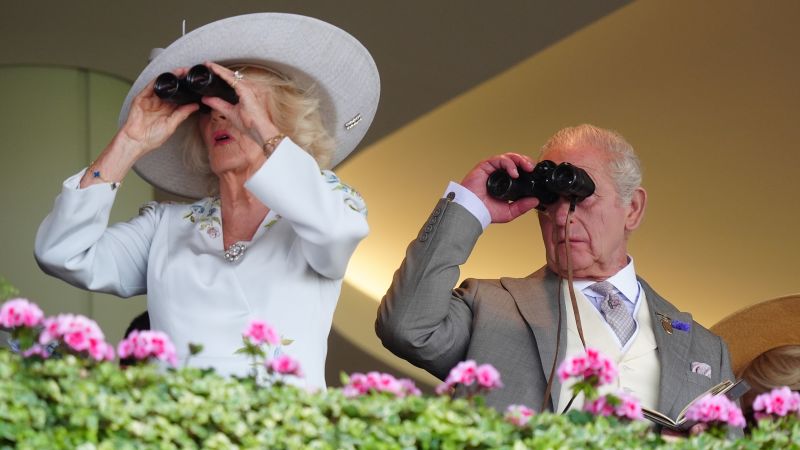
In the British social calendar, no event quite matches the prestige, pageantry and formal dress protocols of Royal Ascot. Members of the monarchy wave from carriages, aristocrats don faintly cartoonish top hats and extravagant millinery threatens to obscure the view at every turn. There’s also horse racing.
Across five days every June, some 300,000 visitors descend on Ascot Racecourse, just west of London, for the race meet, which dates back to 1711. Each day opens with King Charles and Queen Camilla arriving in a horse-drawn carriage before withdrawing to the most exclusive viewing area, the Royal Enclosure. What sounds like a zoo for the exceedingly posh is an invitation-only section with an infamously strict dress code.
For centuries, spectacular hats have been woven into the social fabric of Royal Ascot. And the formal attire of the upper class continues to define the strict dress code today. Women are required to wear a headpiece in almost all the enclosures — though what exactly that looks like, depends on the class of ticket.
Inside the Royal Enclosure, it’s top hats and waistcoats for the gentlemen. For the ladies, hats or a headpiece with a base of at least 10 centimeters (3.9 inches). Fascinators — those bobbing bundles often of feathers, flowers and netting perched off-center of the wearer’s head — are banned here. Though they make an exception for children. In the more relaxed Queen Anne and Village Enclosures, smartly-dressed spectators get away with all kinds of outlandish headwear. And in the Windsor Enclosure, well, just about anything goes. Though they do draw the line at sneakers.

Costumes are strictly banned, but that doesn’t mean you can’t have fun. British socialite Gertrude Shilling, the mother and muse of milliner David Shilling, delighted Ascot crowds for decades by wearing her son’s fantastical creations. From the late 1960s through to her death in the 1990s, Shilling wore such gravity-defying pieces as a five-foot-tall hat in giraffe print and a broad-brimmed orange feathery number wide enough to take flight.
Shilling’s delightfully madcap spirit lives on at Royal Ascot today — in the more experimental hats or elaborate lawn picnics that verge on performance. It’s all a bit smart and silly at the same time. Much like the advice of Beau Brummell, a close friend of the future King George IV who in the 19th century helped define Royal Ascot’s dress code. Brummell decreed that “men of elegance” should wear waisted black coats and white cravats with pantaloons. He also recommended that boots be polished with Champagne.


