


The European Union’s planned Mercosur trade agreement with four Latin American countries appeared at risk of yet another delay, or possibly even collapse, on Wednesday, a day before leaders were set to discuss it at an end-of-year summit in Brussels.
German Chancellor Friedrich Merz appealed for leaders to get the deal over the line, but French President Emmanuel Macron and Italian Prime Minister Giorgia Meloni both expressed hesitancy in speeches to their national parliaments.
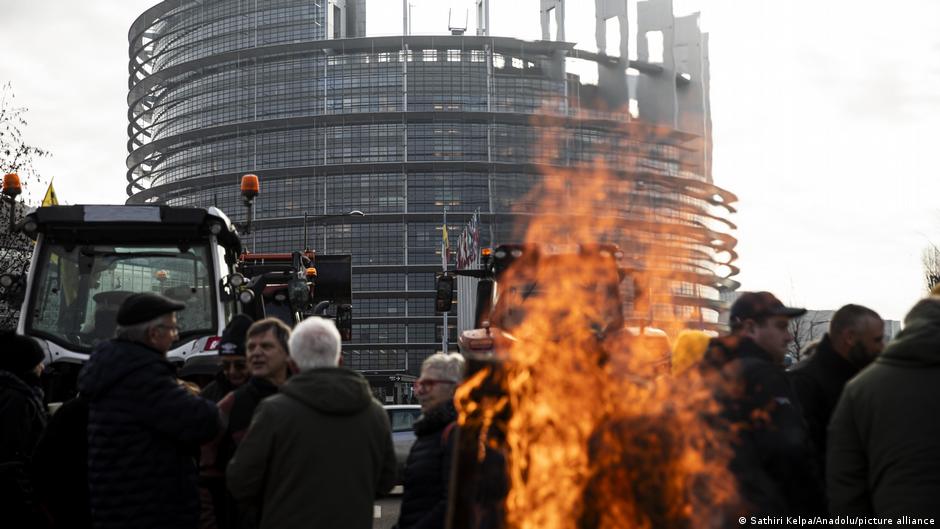
As one of the groups most opposed to the planned deal, French farmers staged protests across the country, including outside the European Parliament in Strasbourg.
Meanwhile, across the Atlantic in Brazil, President Luiz Inacio “Lula” da Silva threatened that if the deal was not finalized as planned this year, he would not entertain a new iteration of it again during his tenure.
What is the EU-Mercosur trade agreement?
The agreement would enable freer trade in several areas between members of the EU and four of Mercosur’s largest members — Argentina, Brazil, Paraguay and Uruguay. It was finalized late in 2024 after 25 years of negotiations.
A parallel agreement including four non-EU members that are part of the European Free Trade Area (EFTA) is also signed and pending ratification.
The deal would allow the EU to export more vehicles, machinery, wines and spirits to Latin America, while facilitating the entry of South American beef, sugar, rice, honey and soybeans into Europe.
Advocates like Germany, Spain and Nordic countries argue that it will help exports hit by US tariffs under Donald Trump and reduce dependence on China by facilitating easier access to minerals from Latin America.
Italy, France and Poland are among the countries to have expressed the most reservations about the proposal, with resistance particularly pronounced among farmers, who say easier imports into Europe could threaten their livelihoods.
European Commission President Ursula von der Leyen had been expected to fly to Brazil to ratify the deal later in the week, but would need the go-ahead from the leaders of EU member states to do so.
Opposition from at least four European leaders, representing at least 35% of the bloc’s population, would suffice to scupper the deal.
Merz calls the signoff a test of the EU’s ‘ability to act’
Chancellor Friedrich Merz told the lower house of the German parliament, the Bundestag, in Berlin that the deal would prove to be a way to “strengthen the European Union’s single market.”
He also alluded to the long-running efforts to reach the accord, which began before the euro currency went into circulation and before the 9/11 terrorist attacks on the United States.
“The European Union’s ability to act is also measured by whether, after 26 years of negotiations, we are finally in a position to conclude this agreement,” Merz said.
Amid a growing push for alterations to the agreement, struck in its latest iteration in 2024, Merz warned that European leaders who “nitpick” on the finer points of the agreement risked missing the bigger picture.
Macron, Meloni say signing now would be ‘premature’
Italy, France and Poland are among the countries to have expressed the most reservations about the proposal, with resistance particularly pronounced among farmers, who say easier imports into Europe could threaten their livelihoods.
“If the European authorities are minded to force it through, France would oppose it very strongly,” French President Emmanuel Macron told a Cabinet meeting in Paris, amid major nationwide protests by French farmers, according to government spokeswoman Maud Bregeon.
“No-one would understand if vegetables, beef and chicken that are chemically treated with products banned in France were to arrive on our soil,” Bregeon told a news briefing.
Italian Prime Minister Giorgia Meloni raised the issue in her comments to parliament on Wednesday prior to departure for Brussels.
“The Italian government has always been clear in saying that the agreement must be beneficial for all sectors and that it is therefore necessary to address, in particular, the concerns of our farmers,” Meloni said. She said that finalizing a deal without striking further measures to protect the agricultural sector would be “premature.”
One agricultural “safeguard” mechanism was agreed upon on Wednesday in negotiations in Brussels, according to a European Parliament trade negotiation account on social media.
It foresees enabling the EU to reintroduce tariffs temporarily in the event of either sharp reductions in imported prices or sharp increases in the amounts imported over a relatively short period of time. Whether this will suffice to placate France, Italy or other potential critics remains to be seen.
Lula says Brazil won’t make another offer during his tenure
In Brazil, Preisdent Luiz Inacio Lula da Silva warned that if the deal and the planned signing ceremony in Foz do Iguacu were to fall through, he would not be willing to renegotiate terms at a later date.
“It’s difficult because Italy and France don’t want to go ahead, due to internal political problems,” Lula told his last scheduled Cabinet meeting of the year. “I’ve already warned them: if we don’t do it now, Brazil won’t make any more agreements while I’m president.”
Lula said that Brazil and Mercosur had worked hard to accept the deal and “send a message at a time when you have a US president trying to weaken multilateralism.”
He argued that the deal was “more favorable to them than to us.”
He said he would go to Foz do Iguacu, near a series of waterfalls on Brazil’s southern border to Argentina, for the anticipated signing “in the hope that they say yes.”
“But, even if they say no, we will be tough with them going forward, because we have given in on everything that diplomacy could reasonably concede,” he said.
Edited by: Dmytro Hubenko
