


Earlier this month, gaming giant Electronic Arts was sold to an investment consortium including Saudi Arabia’s Public Investment Fund and US President Donald Trump’s son-in-law, Jared Kushner, for $55 billion (€47 billion).
The deal stood out in a few ways. It is believed to be one of the largest leveraged buyouts in history, meaning a significant chunk of the $55 billion was borrowed money that the company itself will have to pay back.
It was also the second-biggest deal in gaming history, after Microsoft’s purchase of Activision Blizzard, the company behind the “Call of Duty” franchise, for $69 billion in 2023.
The Electronic Arts sale additionally shone a light on the growing economic significance of the gaming industry and the increasing interest from major global investors such as Saudi Arabia, seeking to benefit from the sector’s cultural and financial clout.
Gamescom — a massive global gathering
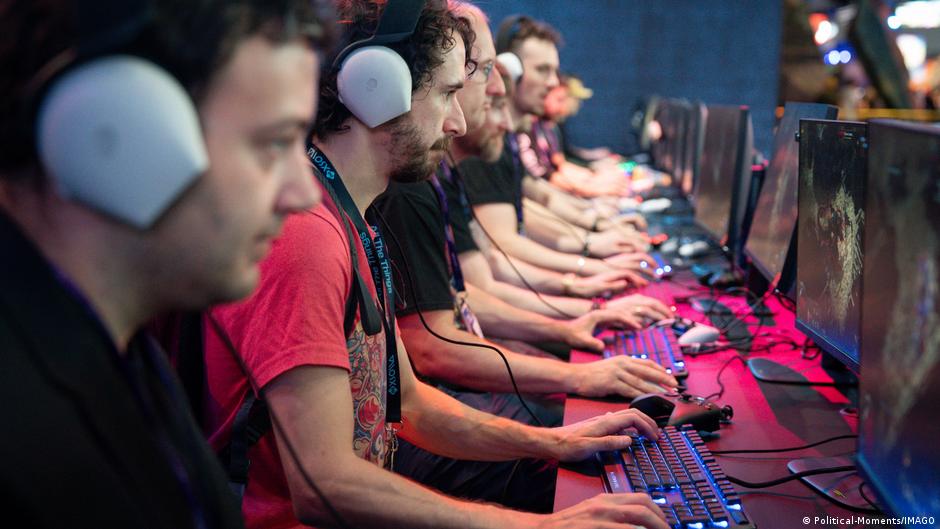
That cultural and financial clout will be on full display over the next few days in the German city of Cologne, where Gamescom, the world’s largest gaming event and trade fair, takes place.
The event attracts thousands of exhibitors and games developers, close to half a million visitors and many more millions of fans connecting online from around the world.
It’s the place where companies build hype for their upcoming releases, with massive rooms packed with screens, consoles and a range of gaming experiences.
“Gamescom is a very useful barometer for the health and mindset of the industry,” Piers Harding-Rolls, a games industry analyst with Ampere, told DW.
That health looks fairly robust at present.
The global games market is currently valued at $213.9 billion, up 6.1% year on year, according to Newzoo, a gaming industry market analysis company. Manu Rosier, the company’s director of market intelligence, says that growth is broad across the sector’s three main platforms: mobile, console and PC.
It now comfortably rivals the movie and music businesses both in terms of finances and, some would argue, cultural significance and reach.
“If you add the music subscription and transactional markets together with the cinema box office, spending on games is over three times bigger,” said Harding-Rolls.
Joost van Dreunen, an assistant professor at NYU Stern School of Business and the author of “One Up: Creativity, Competition, and the Global Business of Video Games,” says gaming’s communal aspects have powered its growth.
“The cultural relevance of interactive entertainment has substantially expanded in the past few years, as millions of players around the world have found a common interest in playing together online,” he told DW. “That’s something few other forms of entertainment have accomplished.”
AI creates new challenges for gaming
Yet the sector faces significant challenges. Like most industries, it is grappling with artificial intelligence (AI) and an onslaught of AI-generated material.
“AI is flooding the existing digital markets with content that is generally disregarded by players,” said van Dreunen. “It nevertheless makes it more difficult for audiences to find relevant content in an expanding sea of slop.”
There is already clear evidence of resistance from gamers toward AI. A recent survey by Quantic Foundry, a gaming analytics company, found that 85% of respondents had a less than neutral position on generative AI.
Another challenge AI is bringing to the gaming industry is cost related. The development of AI infrastructure and data centers has led to a surge in demand for chips and memory, which has driven prices up. Nvidia recently warned some of its largest customers that semiconductor prices would increase by as much as 15%.
That has driven up component costs for the gaming sector. “It shows on every platform. PC builds and upgrades, console prices climbing mid-cycle rather than falling as they did in past generations, and rising smartphone prices,” said Rosier.
He thinks the increased costs could delay the introduction of the next generation of games console in the next few years, while Piers Harding-Rolls thinks it is adding pressure to a sector grappling with other financial concerns.
“Increasing costs for games hardware components pushing up prices, hyper-competition across all areas of the market meaning a glut of content, and challenges in discovery (of new users) and user acquisition,” he said.
Joost van Dreunen also cautions that the sector is now more dominated by the biggest players than in previous years, with major releases this year such as the latest “Grand Theft Auto” and Marvel’s “Wolverine” helping boost overall revenues.
“Demand is more top-heavy than in the boom years, which makes it really strong at the top and precarious in the middle,” he said.
Another challenge is keeping gamers gaming and adding new ones. Manu Rosier says there are now 3.7 billion gamers around the world, more than 40% of the global population and more than 60% of all those who use the internet. However, there are signs that new user growth is slowing, he says.
Gaming enters a new phase of growth
Yet as the industry gathers in Cologne, there is an unmistakable optimism about its prospects. Beyond the gloom around AI, there is the belief that technology could also significantly reduce costs.
“AI is being used across games companies to replace repetitive tasks that are better done by agents including preproduction work and coding. This saves time and hopefully delivers efficiency, with the aim of cutting cost,” said Harding-Rolls.
As for its ability to improve gameplay, many gamers remain doubtful. That’s in part because the definition of a “gamer” has shifted, which has helped the industry itself evolve.
“A generation ago, games were predominantly single-player focused and narrative-driven. Today, games are more social and less focused on story,” said van Dreunen.
Yet that in turn brings its own challenge, with developers competing for the attention of billions of gamers around the world in a more crowded market.
“The market is continually evolving and reinventing itself,” added Harding-Rolls. “Companies are continually challenged to innovate and bring new experiences to consumers.”
Edited by: Tim Rooks
