


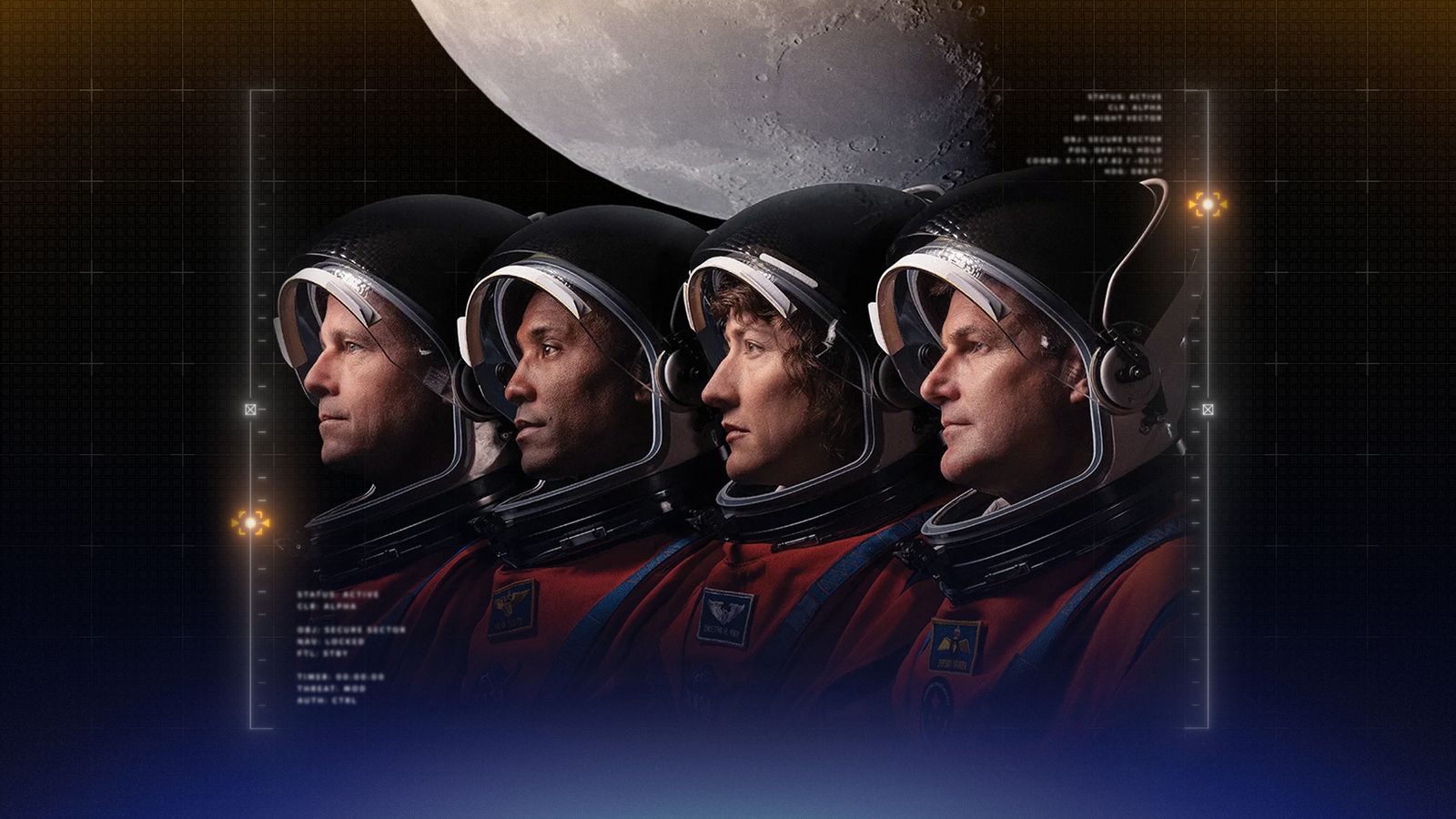
NASA is poised to send astronauts around the moon and back for the first time in more than 50 years.
The space agency’s Artemis II mission will take the crew further than humans have ever ventured in space before.
The mission is planned for as soon as 6 February, but take-off depends on some pretty important factors.
Here is everything you need to know.
What is the Artemis programme?
Artemis is NASA’s lunar exploration programme.
It aims to return humans to the moon for the first time since the last lunar landing in December 1972, which was the last mission of the Apollo programme.
The Artemis missions are part of NASA’s long-term plans to build a space station – called Lunar Gateway – where astronauts will be able to live and work and prepare for missions to Mars.
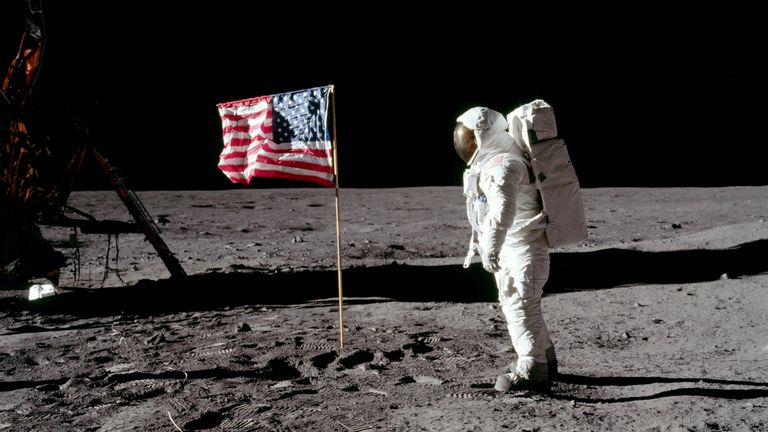
Buzz Aldrin, lunar module pilot for Apollo 11, during the first moon landing in 1969. Pic: Reuters
Artemis I launched in November 2022. It involved sending an empty Orion crew capsule to circle the moon to ultimately test NASA’s Space Launch System (SLS) rocket.
The programme is the pinnacle of renewed interest in the moon (after funding waned in the 1970s).
It is also America’s best effort to beat the likes of China in the space race to return to the moon.
The rocket and spacecraft
The SLS that will take the crew around the moon was unveiled by NASA on 17 January.
The enormous rocket took a painstaking 11.5 hours to travel four miles from the hangar to the launch pad at the Kennedy Space Centre in Florida.
The rocket is taller than Big Ben – standing at 98m – and is in two main sections.
The core stage, which includes the fuel tanks, contains two million litres of hydrogen and 750 million litres of oxygen, frozen so that the gases become liquid.
When mixed and ignited, the chemical reaction produces vast amounts of steam that is forced out of the engine nozzles at 10,000mph.
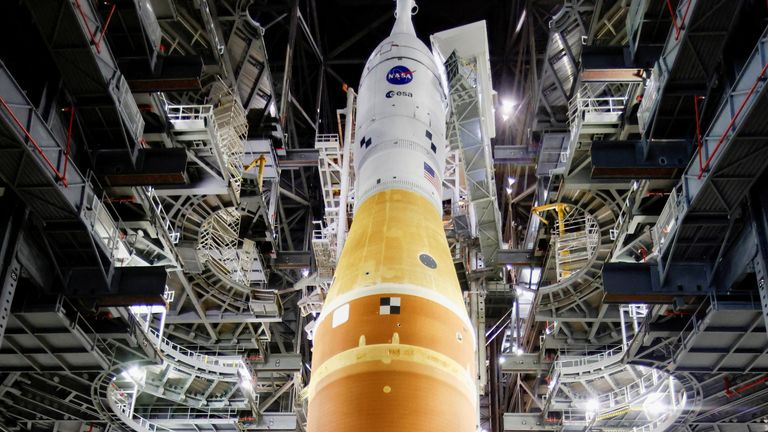
NASA’s Space Launch System rocket with the Orion crew capsule. Pic: Reuters
Clamped to the core stage are two boosters. Just one of these produces the same thrust as 14 jumbo jets and together they produce 75% of the power in the first two minutes of flight.
Once the rocket reaches orbit, the boosters will fall away, leaving the upper stage containing the Orion crew capsule – which has everything the crew need to eat, sleep and exercise – to continue.
NASA says the SLS is the only rocket capable of sending astronauts, cargo and the Orion capsule directly to the moon in a single flight, but a mission like that doesn’t come cheap.
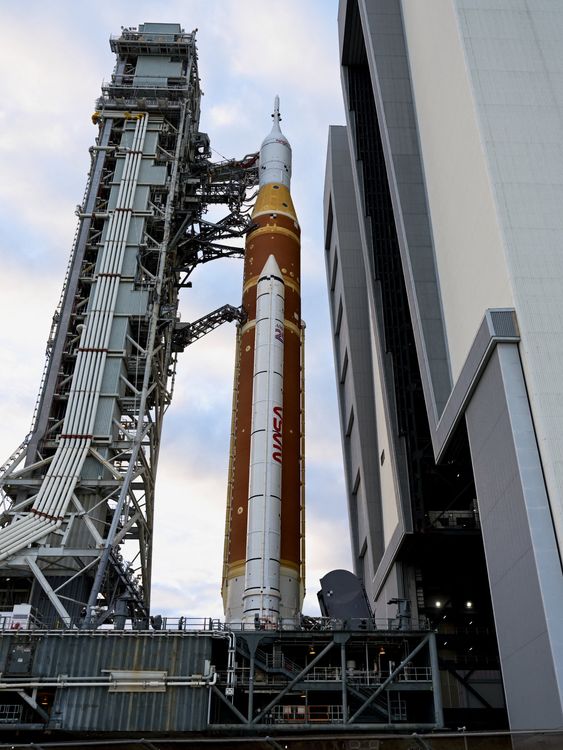
The SLS rocket with the Orion crew capsule, travels towards the launch pad. Pic: Reuters
The SLS rocket programme has cost $23.8bn since its inception in 2011, according to data from the Planetary Society. The Orion space capsule has cost $20.4bn over 10 years since the programme started.
Coupled with the cost of ground infrastructure, NASA has spent a total of $49.9bn on the programme between 2006 and their first test launch in 2022.
The price tag per-launch is roughly $4bn, according to Space.com.
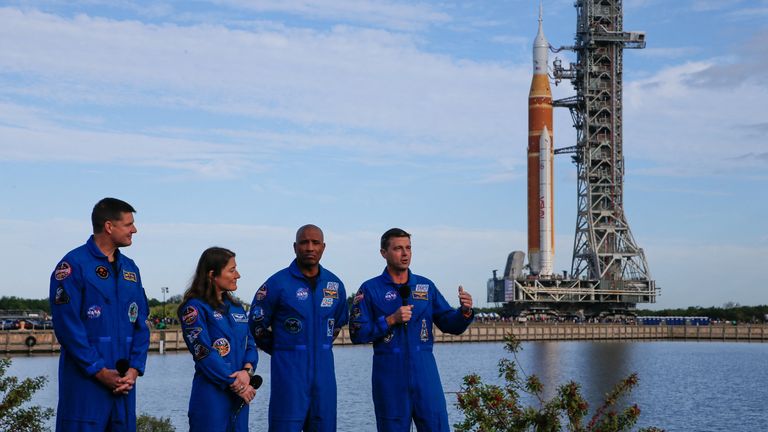
Artemis II Commander Reid Wiseman speaks at Cape Canaveral. Pic: Reuters
What will happen during the mission?
During the 10-day mission, the crew on Artemis II will test life support, navigation and communication systems to confirm everything operates as it should in deep space.
Many of these tests will be completed while the capsule is still in the Earth’s orbit, so that the astronauts are closer to home in the event of anything going wrong.
The capsule will then enter Earth’s high orbit where the crew will manually pilot Orion before control is handed back to controllers at NASA’s Johnson Space Center in Houston, Texas.
The astronauts will then spend four days circling the moon, travelling approximately 4,600 miles beyond its far side before returning to Earth and splashing down in the Pacific Ocean.
How successful the mission is will be critical in bringing NASA one step closer to landing astronauts on the moon, the goal of Artemis III.
This third stage is currently aimed to launch in mid-2027.
Who will be on board?
Artemis II’s crew consists of three American astronauts and a Canadian.
Scroll across and click on the squares to find out more about each astronaut.
On 23 January the crew entered quarantine – also known as the health stabilisation programme – which ensures they do not pick up any illness before take-off.
The astronauts typically start quarantine 14 days before a scheduled launch, but are able to come out again if it is cancelled – which could still happen in this case.
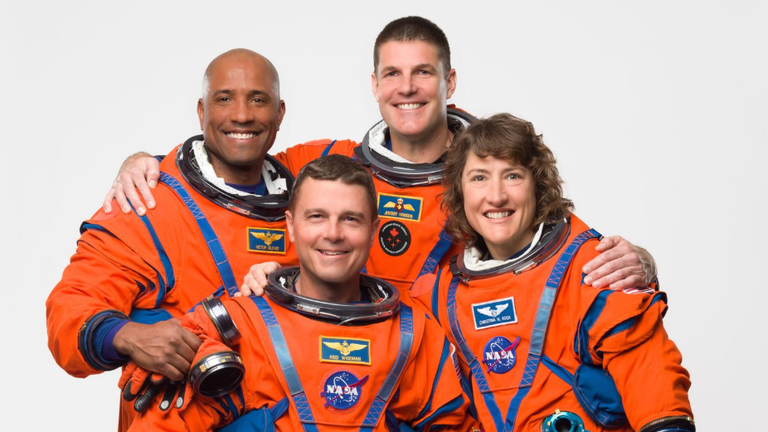
The crew of Artemis II. Pic: NASA
What could delay the launch?
Weighing on the 6 February launch date is the outcome of a key wet dress rehearsal, which happens four days prior and simulates the launch countdown to catch any snags or issues before flight.
Artemis launch director Charlie Blackwell-Thompson told reporters in January that the wet dress is the “driver” of the launch schedule, adding: “You’re going to need a little bit of time to look at the data.”
Crucial flaws during a test flight three years ago have already put Artemis II behind schedule.
The test flight in 2022, without humans on board, identified significant problems with the Orion crew capsule’s life support system and heat shield, which required design modifications to fix.
The weather could also be the critical factor between a launch or a delay.
NASA has a detailed weather criterion to consider factors including the temperature, wind, precipitation, lightning, clouds and solar activity, to check whether a launch is safe or not.
If there is any rain, the launch will likely not go ahead.
When else could it launch?
Artemis II has three launch windows through to April, timed carefully with orbital mechanics to allow for a complex path around the moon and back.
If the 6 February is called off, the mission could take place on the following dates:
• 7, 8,10,11 February
• 6,7,8,9,11 March
• 1,3,4,5,6,30 April
