


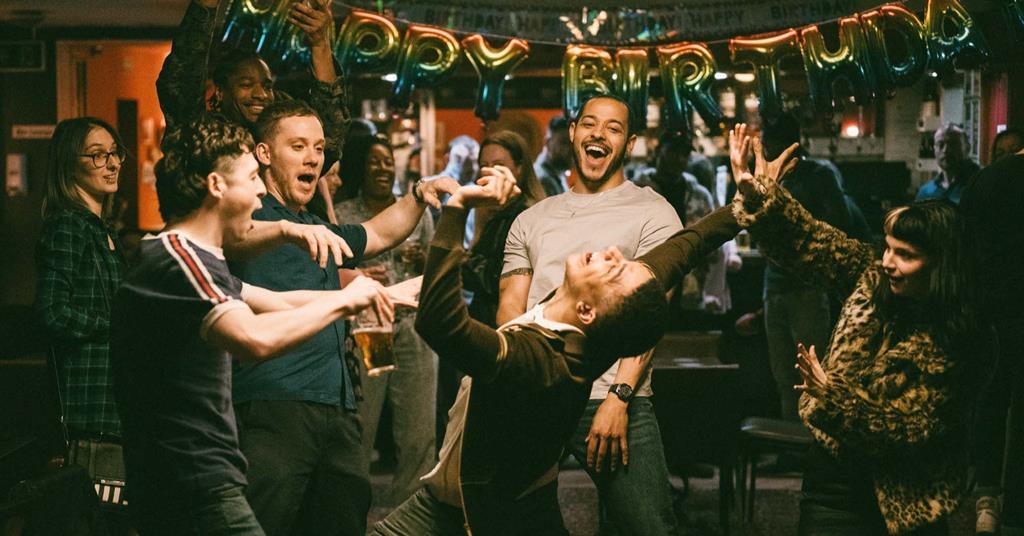
Clio Barnard’s I See Buildings Fall Like Lightning has won the best film prize in the Progressive Cinema competition at the Rome Film Fest, which wrapped today (October 24).
Barnard’s Birmingham-set drama centres on group of childhood friends on the cusp of their 30th birthdays who are forced to confront a life where their hopes and dreams haven’t materialised. It previously won the People’s Choice award in Cannes’ Directors’ Fortnight where it world premiered.
One of the film’s leads, Anthony Boyle, shared the best actor prize at Rome for his role in I See Buildings Fall Like Lightning along with Paolo Pierobon for Italian noir drama Brianza.
Rome’s Progressive Cinema competition gave its jury grand prize to prison drama The Life And Deaths Of Wilson Shedd by Tim Blake Nelson. Amanda Seyfried stars as an English teacher trapped in an abusive marriage, who takes a job at a maximum-security prison in Oklahoma and forms an intense connection with a charismatic inmate in her class.
The best screenplay prize went to Abia Castillo, Diego Rabasa and Diego Luna for migrant Ashes (Ceniza en la Boca), directed by Luna.
The best director prize was awarded to Rafiki Fariala for Congo Boy, which also shared the festival’s audience award with Nepal-set documentary Mustang by Kasia Smutniak.
Victoria Luengo won the best actress for her role in Spanish heist thriller Saints. The competition’s special jury prize went to the Al Mawla family for Yesterday the Eye Didn’t Sleep, which centres on a Palestinian family forced to flee because of a blood feud with another family from a different tribe in the Lebanese Bekaa Valley.
The Progressive Cinema competition jury was chaired by Polish director and screenwriter Jan Komasa, joined by actress and producer Alice Braga; the Canadian-Jordanian actress and poet Saja Kilani of Palestinian descent; the Spanish screenwriter, director, and editor Carlos Marques-Marcet, and the Italian-American director and screenwriter Alessio Rigo de Righi.
Meanwhile, Rome Film Fest’s best first feature prize went to Clementine Orange by Swedish filmmaker Lisa Forslund, which world premiered in the festival’s Freestyle section. The film focuses on a young woman who has fallen in love with a prisoner whose letters and photos have sparked fantasies of a dangerous, forbidden love.
A special mention was given to debut feature The River Train by Lorenzo Ferro and Lucas A. Vignale, which also played in the Freestyle section.
The first feature jury was chaired by the Italian screenwriter and director Ludovica Rampoldi, joined by the French director Pauline Loquès, and the Romanian writer, director, and producer Corneliu Porumboiu.
The festival’s documentary prize was awarded to Into The Jaws Of The Ogre by Mahsa Karampour, while a special mention went to A Russian Winter by Patric Chiha. Both documentaries played in Rome’s Special Screenings section.
The documentary jury was chaired by the Italian director Roberto Minervini, joined by the Spanish producer Andrea Queralt and the Argentine-British Jessica Sarah Rinland.
Rome’s Banca Ifis music award went to Nicola Piovani, while the Gillo Pontecorvo Award went to Emmanuel Marre for Notre Salut.
During the festival, Rome gave its industry lifetime achievement award to UK producer Tessa Ross, lifetime achievement awards to Javier Bardem and Julianne Moore, and its progressive lifetime achievement award to Anthony Ippolito.
The festival reported 82,238 tickets sold and 4,651 accreditations. It screened 194 films across 527 screenings.
