


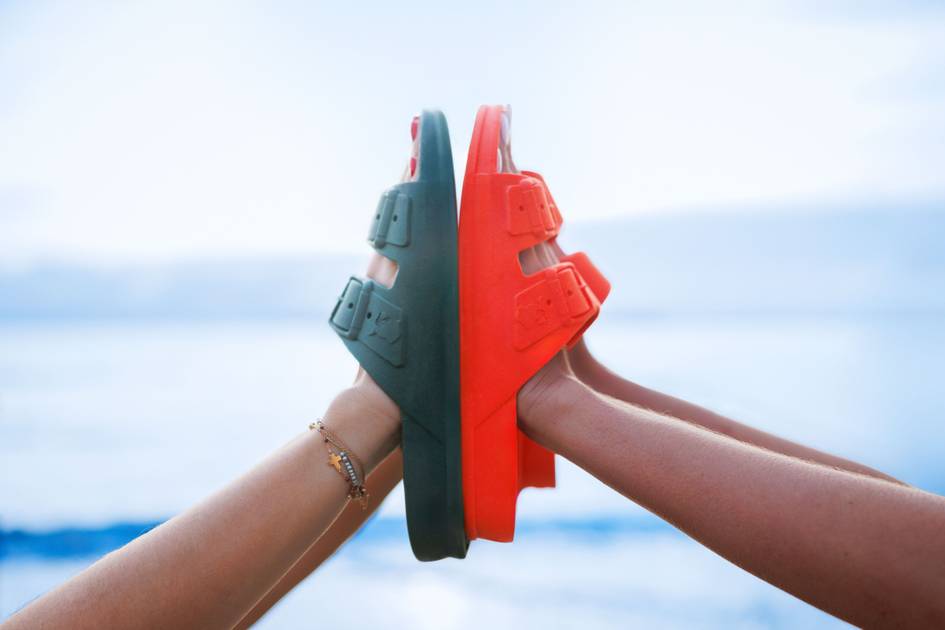
The lifestyle and summer sandal brand Cacatoès is launching Mosquitoès, an anti-mosquito sandal. This is a large-scale application of a repellent that is integrated directly into the material of the shoe. The timing may make it sound like an April Fool’s joke, but (as far as we know) it is not.
Founded in Marseille and led by Jordane Assouline, Cacatoès specializes in the production and distribution of polymer (plastic) sandals. The sandals are water and heat resistant, machine washable and recyclable. Production takes place in Brazil. Cacatoès is distributed in more than forty countries and has a network of more than a thousand resellers, of which approximately 500 are in France.
When fashion and functionality come together
Mosquitoès, the new anti-mosquito sandal, has a function that reduces insect bites. This was developed in collaboration with Proneem, a company from Marseille that specializes in green chemistry for textiles and materials.
The Protector technology developed by Proneem is based on a micro-encapsulation process for polymers. The technology consists of extracts of lemon eucalyptus, known in aromatherapy for their insect repellent properties, and IR3535 (ethyl butylacetylaminopropionate).
This synthetic active ingredient, developed by the German group Merck, is used to repel mosquitoes, ticks and other biting insects. It is not an insecticide (it does not kill them), but a repellent that prevents bites. It has been approved in many countries and is recommended by the WHO.
This technology is integrated during production and processed directly into the core of the material. This is a process that is rarely used in consumer shoes.
The claimed effects are the formation of a durable protective shield, resistance to water and heat, and a guarantee of lasting comfort.
According to the press release, laboratory tests have shown a repellent effect of 94.34 percent and a protection against bites of 98.4 percent. Also, there is an almost complete reduction in landings and bites compared to bare feet, even in an insect-heavy environment.
This article has been translated into Dutch using an AI tool.
FashionUnited uses AI language tools to speed up the translation of (news) articles and proofread the translations to improve the end result. This saves our human journalists time that they can spend on research and writing their own articles. Articles translated using AI are checked and edited by a human desk editor before going online. If you have any questions or comments about this process, please email info@fashionunited.com.
