



Want to bookmark your favourite articles and stories to read or reference later? Start your Independent Membership today.
Join today
Already a member?
Log in
There are nearly two dozen male cast members in A Few Good Men. Yet it’s a woman who provides the new Broadway revival’s pulse.
For the first time since it’s original production and the subsequent 1992 film adaptation, Aaron Sorkin’s military courtroom drama is back on Broadway at Lincoln Center’s Vivian Beaumont Theatre. Directed by Broadway’s resident maximalist Michael Arden, the revival stars The West Wing’s Bradley Whitford and stage veteran Krysta Rodriguez, along with The Hunger Games’ Tom Blyth in his Broadway debut. The trio help tell the story set in 1989 of two U.S. Marines charged with murder at Guantanamo Bay, when Navy lawyer Lt. Daniel Kaffee (Blyth) is assigned to the case with Lt. Cdr. Joanne Galloway (Rodriguez) assisting. They’re up against Colonel Nathan Jessep (Whitford) and governmental manipulation and corruption (sound familiar?) as they chase justice for their clients.
In some ways, A Few Good Men is a classic tale of an overqualified woman fighting for her place at the male-dominated table. This particular story gets off to a slow start with legal jargon and military ranks foreign to the plebeian ear requiring a careful listen. But Sorkin’s script evens out, and includes well-placed zingers landing in crucial moments (aided by Arden’s direction) to break up the intensity of the story. Here, though, the few good men are led by a great woman.
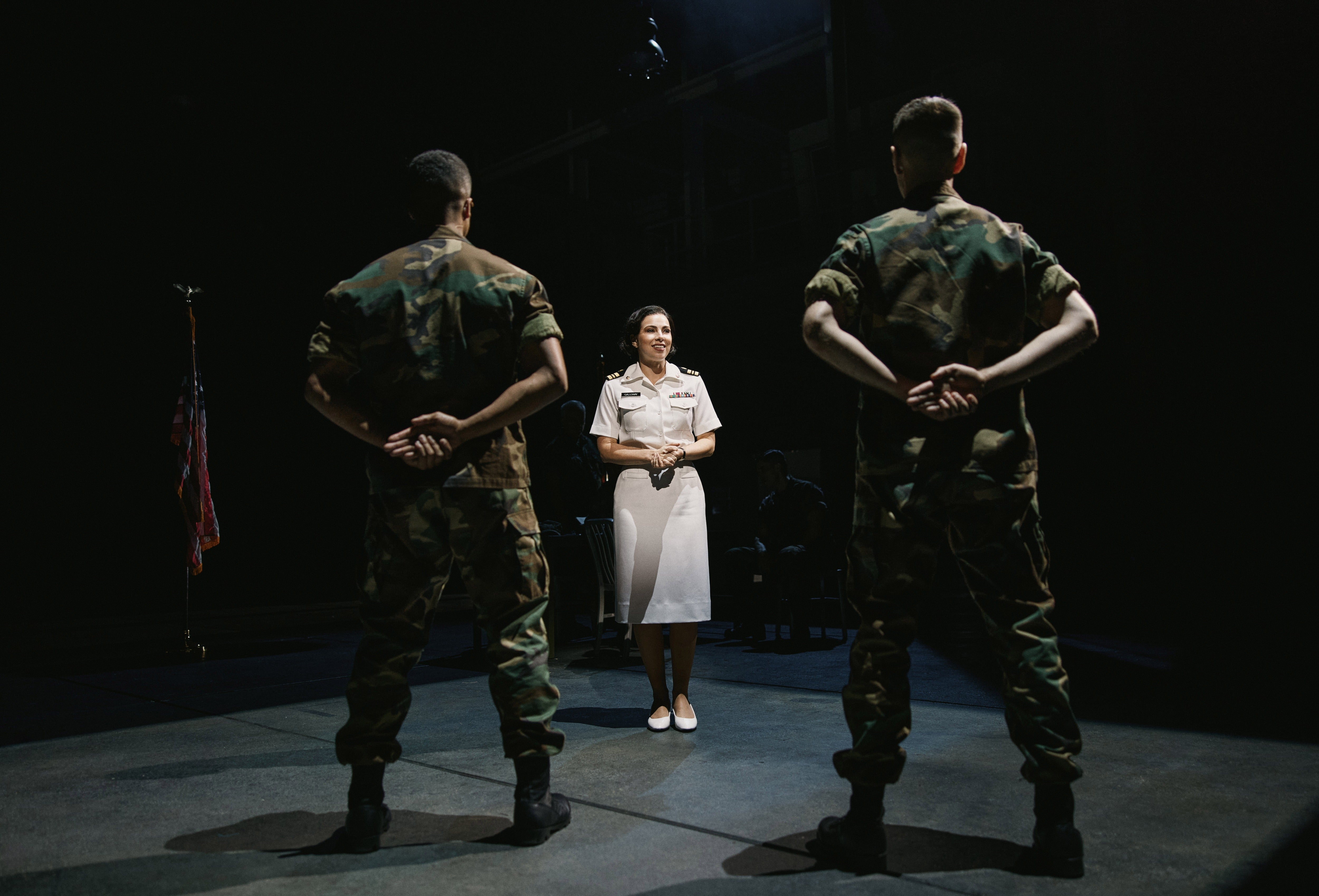
As the sole female principal, Rodriguez drives the production. Her plucky Galloway is loaded with charisma and gumption — and a consistent refusal to accept “no” as an answer. She pokes and prods, unrelenting in her pursuit of the truth. Honestly, it’s exhausting to watch her jump through hoops and repeatedly justify her belonging in these rooms. But Rodriguez more than holds her own against the cast of men; it’s delightful to see this musical theater darling show off her acting chops. It’s a contrast to Blyth’s performance, which borders on bland thanks to his subdued delivery and line flubs (at least at the performance I attended).
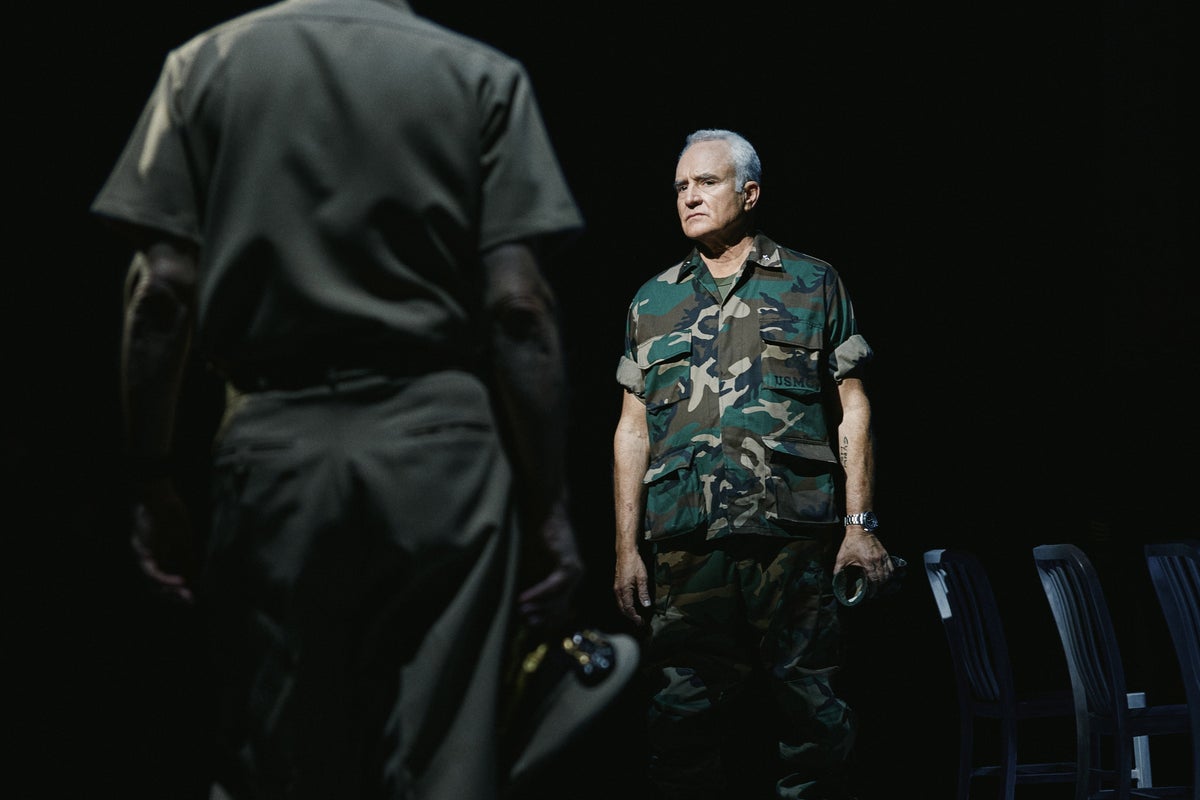
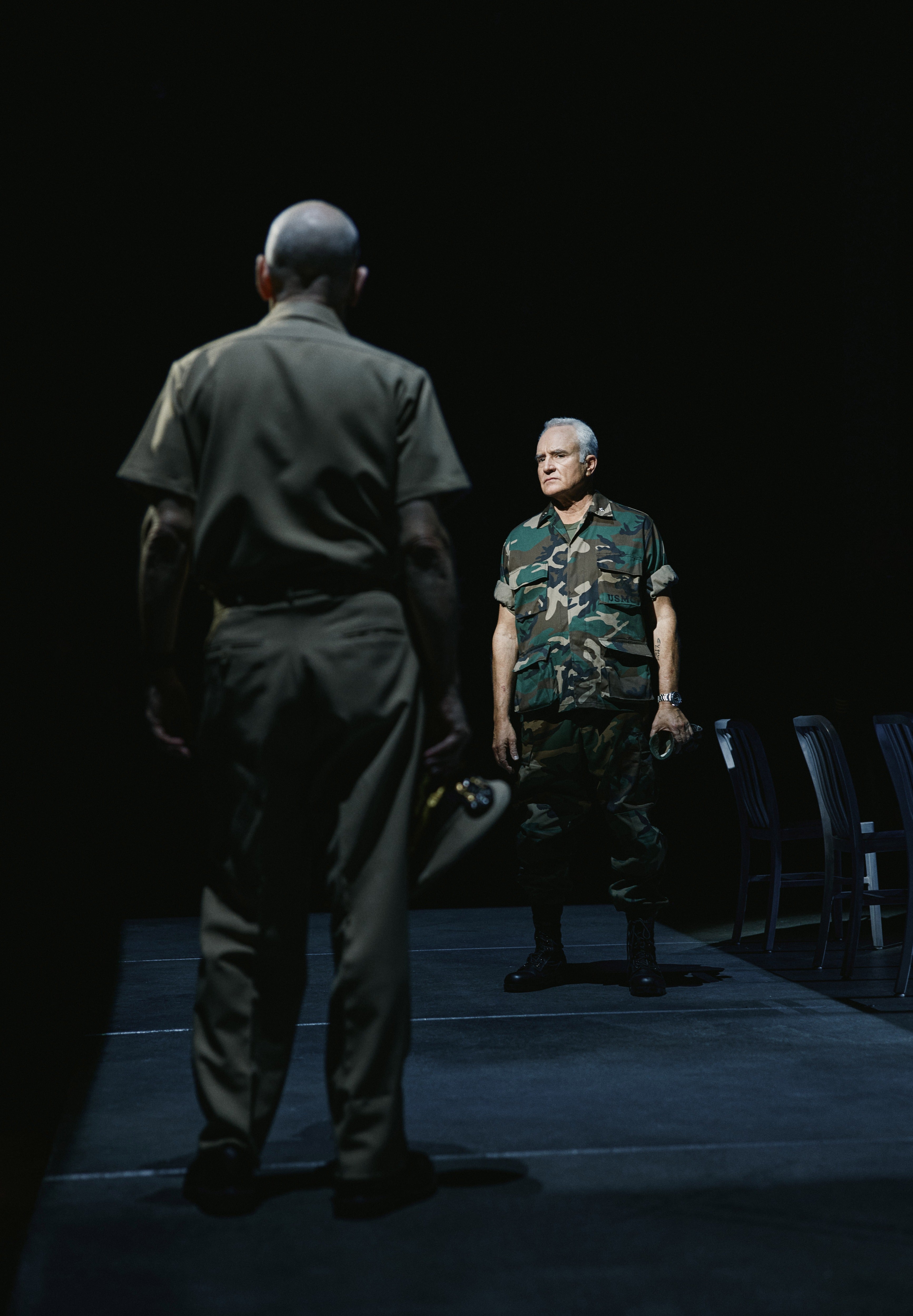
Whitford, however, is the show’s scene-stealer as Colonel Jessep; his performance simmers to a boil and leaves a lasting impression long after the curtain falls. His mannerisms from the beginning, though subtle, hint at a manic ego maniac desperate to retain his power and influence over everyone around him. The evolution of his character is captivating, and Whitford is thrilling to watch. It’s hard to believe that aside from a one-night benefit in 2011, Whitford has been away from Broadway for nearly 20 years; in this production, he’s right where he belongs.
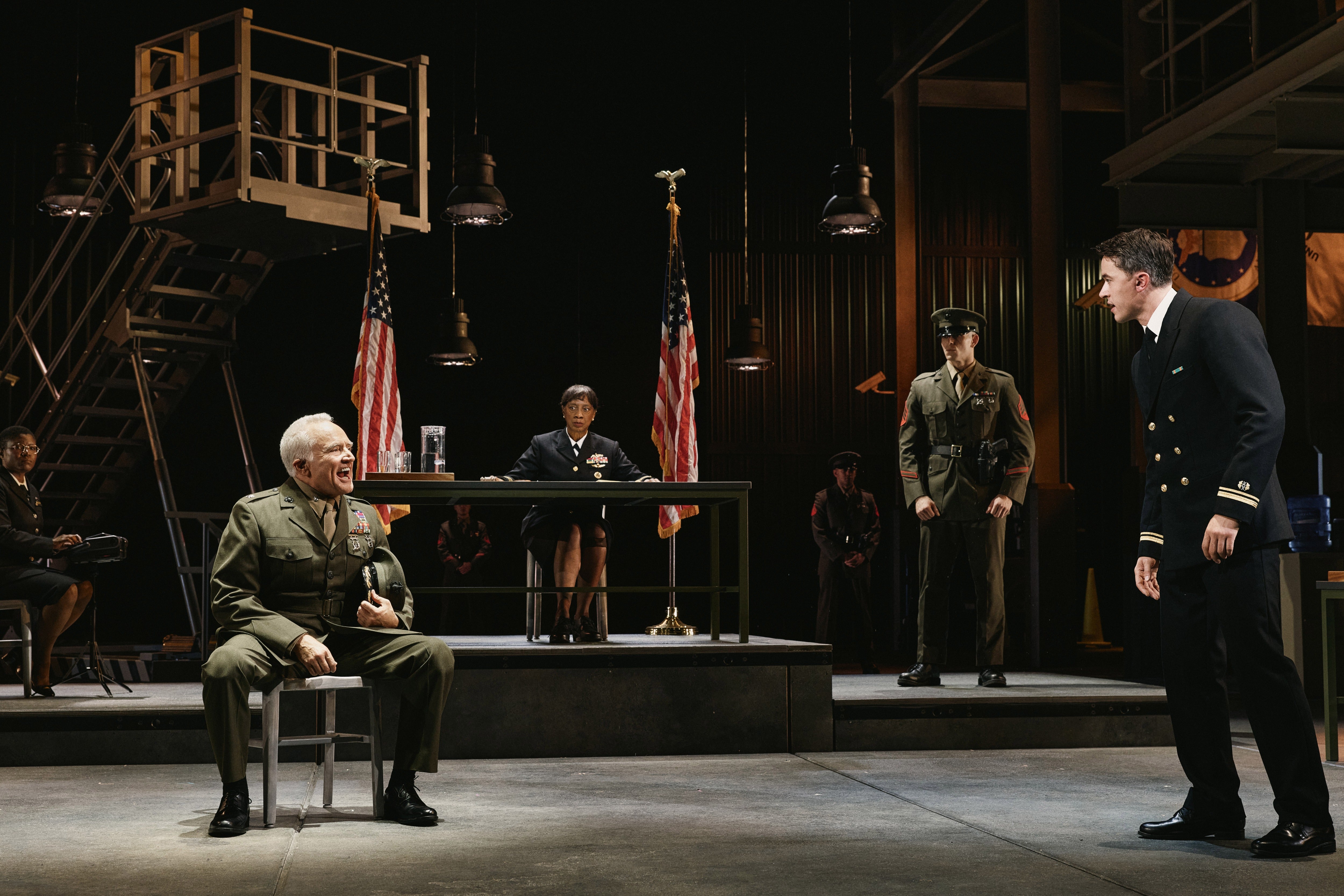
On the production side, it was refreshing to see Arden (who, last season, directed a pair of spectacles: The Queen of Versailles and the Tony-winning The Lost Boys) tackle a serious drama. His direction, combined with the precision of Japhy Weideman’s lighting design and Dane Laffrey’s scenic design, help drop audiences into the Guantanamo Bay naval base and, later, the courtroom. The Beaumont is a vast, deep theater but the well-appointed set felt just right; not too large and not too many moving pieces. The transitions are actually so smooth, it’s occasionally unclear for a few moments that certain scenes are flashbacks.
But even when this production occasionally falters one thing remains clear whether in 1989, 1992, or 2026: women can do it — and sometimes (often) better than men.
