


When 32 countries this week moved to tap their emergency crude oil stockpiles in an effort to steady soaring oil prices, the gesture was quickly overshadowed by Iran’s escalating strikes in the Strait of Hormuz.
The members of the International Energy Agency (IEA), a coalition of major energy‑consuming nations, agreed on Wednesday to release hundreds of millions of barrels of oil from their strategic oil reserves.
Instead of helping oil prices lower, the price of Brent crude rose around the $100 (€87.30) a barrel mark toward the end of the week, having spiked to $119.50 for a short time on Monday.
Around the announcement, Iran intensified its attacks near or in Hormuz, striking multiple commercial vessels — including oil tankers and cargo ships — with projectiles, drones and explosives.
Since the war started on February 28, Tehran has effectively blockaded the narrow strait, used by Gulf nations to export a fifth of the world’s crude oil and gas, mostly to Asia, halting almost all tanker traffic.
Major oil producers in the region, including Saudi Arabia, Iraq, Kuwait and the United Arab Emirates, have also cut output as their domestic storage near capacity, further raising concerns about energy market stability.
What is a strategic oil reserve?
A strategic oil reserve is a government-controlled stockpile of crude oil held for use during supply disruptions or market emergencies.
The first modern reserve was created by the United States in 1975 after the Arab oil embargo exposed the vulnerability of global energy supplies.
That shock quadrupled the price of oil, triggering fuel shortages across the West and exposing just how vulnerable economies were to sudden supply cuts.
Today, dozens of countries — mostly IEA members — maintain strategic reserves as part of a coordinated system to protect energy security.
Together, IEA members maintain over 1.2 billion barrels of public emergency reserves, supplemented by roughly 600 million barrels held by industry.
China is believed to have the largest emergency reserves, followed by the US. Although Beijing keeps a tight lid on exact figures, energy and shipping analytics firm Vortexa estimated the country’s total stockpile at 1.3 billion barrels.
The cache is thought to be enough to keep the Chinese economy powered for up to three to four months.
The US federal stockpile of 415 million barrels, backed up by 439 million barrels held privately, equates to more than 40 days of emergency supply.
How much oil have IEA members agreed to release?
The IEA said members would release 400 million barrels of oil from their emergency stockpiles. By comparison, after Russia invaded Ukraine in 2022, the previous record released was 182 million barrels.
The Paris-based energy agency said stocks would be made available gradually based on each country’s circumstances.
The US will lead with a contribution of 172 million barrels from its Strategic Petroleum Reserve (SPR), starting next week. US deliveries are expected to be rolled out over 120 days.
Japan said it would release around 80 million barrels, equivalent to some 45 days of domestic supply, drawing from both private-sector and state stockpiles.
Other contributors include Germany, Australia, France, South Korea and the United Kingdom.
IEA members are expected to keep around 90 days of emergency stockpiles of net oil imports. A caveat allows major exporters like the US — the world’s biggest oil producer — to hold less.
Pure net exporters like Canada, Mexico and Norway have zero emergency stockpiles, but can tap commercial inventories during crises.
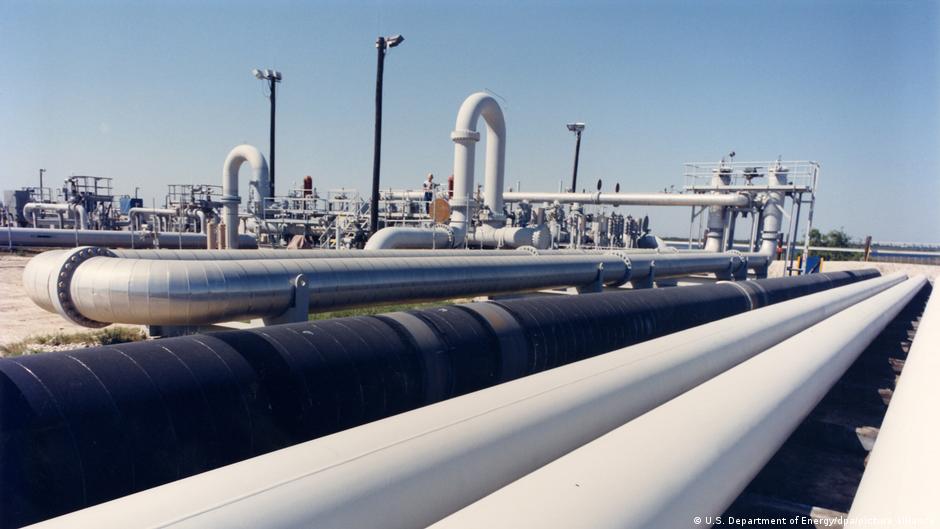
The US SPR is made up exclusively of crude oil, stored in underground salt caverns along the Gulf Coast.
Other countries, including in Europe, keep more diverse products, including petroleum, diesel and jet fuel in their strategic reserves.
China, which is not a full IEA member, has made no similar announcement and is instead prioritizing domestic supply security by halting refined fuel exports.
Beijing’s latest five-year economic plan, announced last week, calls for further expanding its strategic oil reserves, continuing years of heavy stockpiling.
Will the reserves help bring oil prices down?
Oil industry analysts say tapping strategic reserves can ease immediate pressure on oil markets, but they rarely deliver a dramatic or lasting drop in prices.
These releases work mainly by signaling unity and extra supply, reassuring traders that governments are willing to intervene if shortages worsen.
The IEA said the release only covers around three to four weeks of lost oil flows from the Gulf region.
So while they may shave a few dollars off the oil price, the effect is expected to be limited as the volumes released are small compared with the 100-million-barrel-a-day global oil market.
Analyst David Morrison at UK brokerage Trade Nation was cited by AFP news agency as saying that if the simultaneous moves by dozens of countries were “supposed to cap prices, then they failed dismally”.
He said the market may have interpreted the gesture as “panic,” given Iran’s de facto shutdown of the vital Hormuz chokepoint and recent escalations.
The London-based Capital Economics said prices are likely to go higher if Hormuz remains shut off for a longer period.
“Although the IEA would still have stocks to draw upon after this release, a more prolonged conflict … could lead to losses … greater than the total reserves directly held by IEA members,” wrote Hamad Hussain, climate & commodities economist, at Capital Economics, in a research note.
Edited by: Ashutosh Pandey
