


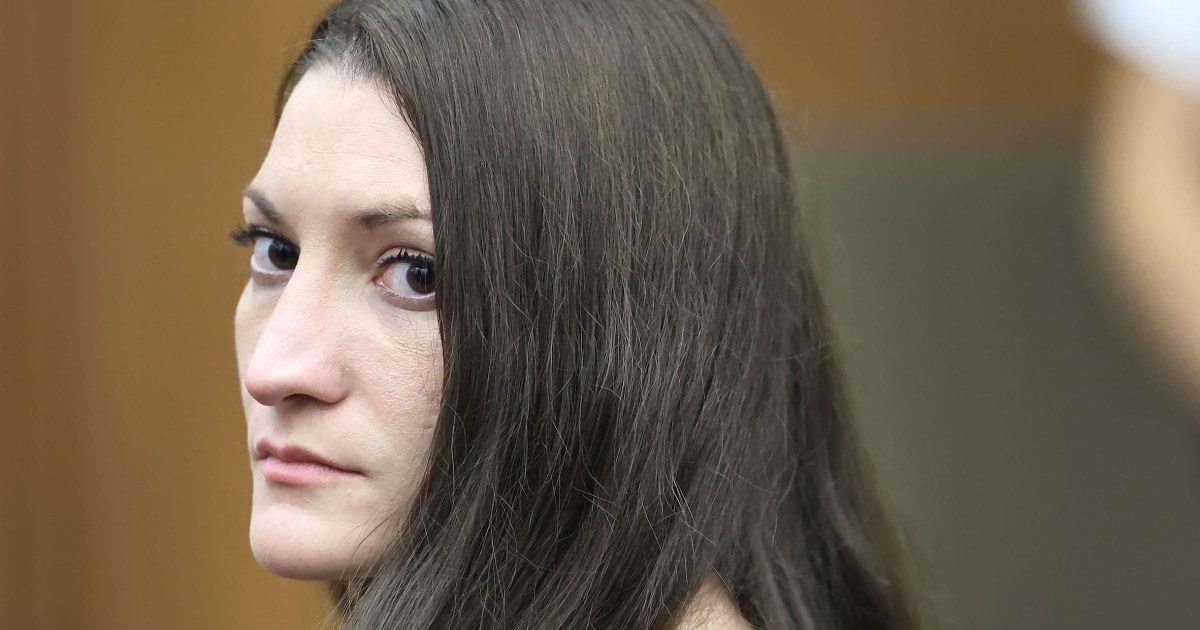
The jury in Lindsay Clancy’s murder trial told the judge Tuesday morning that it was unable to come to a unanimous decision at the start of a fourth day of deliberations.
Judge William Sullivan instructed the jurors to go back and continue deliberations.
“I know that this was a long trial,” he said. “I know there were over 80 witnesses, over 300 exhibits. But because of that, I’m going to ask you to go back out, keeping in mind all the instructions that I gave you. To go out and to continue your deliberations at this time.”
Clancy, wearing a beige sweater, did not appear to show any emotion. Her parents and sister were also present in the courtroom.
The prosecution and Clancy’s attorney, Kevin Reddington, did not object.
Under Massachusetts law, Sullivan can encourage the jury to go back to the jury room, but not more than twice unless the jury consents to it. If the jury still cannot reach a unanimous verdict, the judge can declare a mistrial.
Earlier Tuesday, Reddington had said that he would “absolutely” go to trial again if the verdict ends in a hung jury.
“Maybe today’s the day; we’ll see. I don’t know,” said Reddington, who is representing Clancy in a murder trial that will determine if she is criminally liable in the killings of her three young children.

The attorney said he has “really strong faith” in the jury, noting that members showed attentiveness throughout the five-week trial.
When asked by a reporter what a hung jury would mean, Reddington responded: “Try it again.”
“Would you do the trial again if there’s a hung jury?” another reporter asked.
“Absolutely,” Reddington said.
The 12-person jury made up of nine women and three men began deliberating Thursday afternoon. The jury had one question Friday when it asked the judge to review pill bottles and a knife that had been entered into evidence.
The jury is weighing whether to convict Clancy of first-degree murder after she was accused of using exercise bands to strangle her three children — Cora, 5, Dawson, 3, and Callan, 8 months — in the basement of their Duxbury home in January 2023. Her then-husband, who was running errands at the time, found her outside underneath a second-story window following a suicide attempt that left her paralyzed from the waist down.
Clancy’s attorney has argued that she was in a state of postpartum psychosis and heard a voice at the time of the killings. According to Clancy’s legal team, she had previously sought help for mental health issues.
Prosecutors, however, said she was not in psychosis and planned the murders ahead of time.
The jury also has the option to convict her of lesser charges, including second-degree murder and manslaughter, or absolve her of the crime or deem her not guilty by lack of criminal responsibility. If the jury finds her not criminally responsible, that means that jurors believe she could not control her actions because she was in psychosis.
The case has garnered national headlines, fueling social media chatter and podcasts for weeks as spectators debate postpartum mental illness and the gaps in maternal healthcare raised during the trial. Supporters of Clancy, often dressed in pink, have gathered outside the Plymouth, Massachusetts, courthouse and sat in the gallery throughout the trial.
