


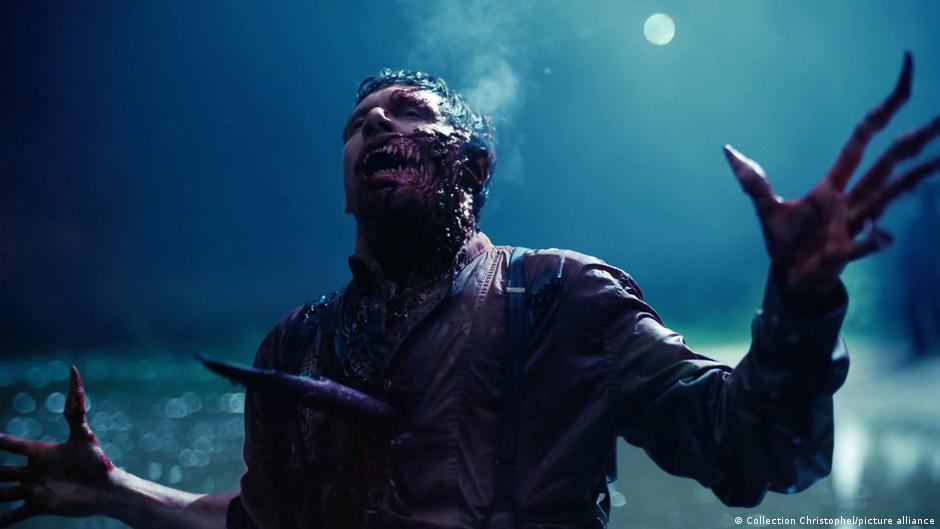
In the run-up to the Oscars on March 15, all eyes are on Ryan Coogler’s “Sinners,” nominated for a record-breaking 16 Academy Awards.
The horror film, set in the early 1930s southern United States, follows twin brothers who return to their hometown, hoping to start over by opening a place for the African American community amid the pressures of Jim Crow-era life.
As the opening night unfolds, the celebration reveals that the brothers and their community are being targeted by vampires.
Alongside the monsters, the story highlights the social and racial violence of the period, suggesting that the supernatural horror mirrors very real historical fears.
That’s exactly what the vampire has been doing for years: The figure represents the concerns of any given society. This role is crucial to understanding why the vampire holds an undying role in pop culture.
A popular folkloric figure
Vampire-like figures have long existed in myth, folklore and religion. There were stories of blood-drinking demons in Mesopotamia. In ancient Greek and Roman mythology, the “strix” was a bird of ill omen associated with feeding on blood. Hindu mythology described the “vetala,” a spirit inhabiting corpses.
Later, vampires appeared in Slavic and Balkan folklore, featuring some of the characteristics we have come to associate with the blood-thirsty monster nowadays: reanimated corpses that easily fell prey to stakes, sunlight and, of course, garlic.
The first vampire to make an appearance in English literature was in John Polidori’s 1819 short story “The Vampyre,” embodied by the aristocratic Lord Ruthven.
It was then followed by the most famous vampire in literature, via Bram Stoker’s 1897 novel “Dracula,” which solidified the vampire’s place as a true Gothic-era monster.
Vampires hit the big screen
The vampire craze reached new levels with the advent of film. There have been hundreds of movies featuring the bloodsucking count, making him, according to some sources, the most portrayed literary character in films after Sherlock Holmes.
The reasons for this are manifold, spanning from our obsession with achieving the impossible — immortality — to something perhaps even more disconcerting.
“Vampires endure because they’re the monsters that look most like us. They act most like us — they’re greedy and destructive,” says Sorcha Ni Fhlainn, a professor of film studies at Manchester Metropolitan University in the UK, who has focused extensively on vampires in cinema and literature.
“Although we know roughly what they look like, they’re always changing, depending on the story they’re serving and sometimes the national mood in which we find the film has been released,” she told DW.
Werner Herzog’s 1979 “Nosferatu” is an example of film meditating on the national mood in Germany at the time, the scholar points out. The Herzog film — which features a vampire who moves to a rural village to buy real estate — is a reflection on the postwar period and the horror of the Holocaust in Germany.
Vampires take over the US
In the current context of political and societal upheaval the US, it’s not difficult to see why these creatures might strike a chord at the moment — and it’s not the only period in history.
The 1970s, says Ni Fhlainn, were “a very Dracula-heavy decade — the one where we have the most condensed versions of Dracula — Dracula on stage and many Dracula films.”
It was also a decade of extreme social upheaval. The US was rocked by the Watergate scandal and constitutional crises, while nationalist parties were on the rise in Europe. Meanwhile, vampires were seemingly everywhere in pop culture, their characters changing to reflect the zeitgeist.
In the early 1970s, the scholar says, Dracula was typically played by an older man, “representing this order of elder businessmen and powerful people; an older way of looking at the world,” as in films like “Dracula A.D. 1972.”
By the end of the decade, a younger, sexier Dracula emerges, such as in Anne Rice’s 1976 novel “Interview with the Vampire.”
The figure of the vampire then becomes explicitly sexualized in the novel’s film adaption, starring Tom Cruise, and the “True Blood” series, for example.
The introspective vampire
The trend of the vampire as a seductive figure — and one which is fallible, introspective and even seeking to hide his true identity from the outside world — becomes increasingly apparent in the post-Cold War period.
“Vampires tended to go inward and look at their society, their group — almost like a national context of reexamination of who we are, where we’re going,” points out Ni Fhlainn.
Vampire stories give us a way to touch on aspects of power dynamics and inequality, giving opportunities to discuss those topics through the language of symbolism and fantasy, adds the scholar.
“I think sometimes we can’t approach things head on; we have to be a little bit oblique in order to actually talk about the serious stuff that happens in our world because it’s too heavy otherwise,” she says. “Vampires give us that lovely opportunity to unpack it all.”
Edited by: Elizabeth Grenier
