


It all started in 1993 when the rock band Pearl Jam were looking for an alternative venue that was not controlled by Ticketmaster, which it was boycotting at the time.
The Empire Polo Club, a desert oasis in the Coachella Valley in California, hosted some 25,000 people for their gig, giving the promoters the inspiration for an outdoor festival at the same site.
In October 1999, the Coachella Valley Music and Arts Festival was born as an alternative to the unruly and chaotic Woodstock festival from a few months earlier. Global acts from Rage Against the Machine to the Chemical Brothers and Morrissey performed at the event. Despite its success, the promoters lost money.
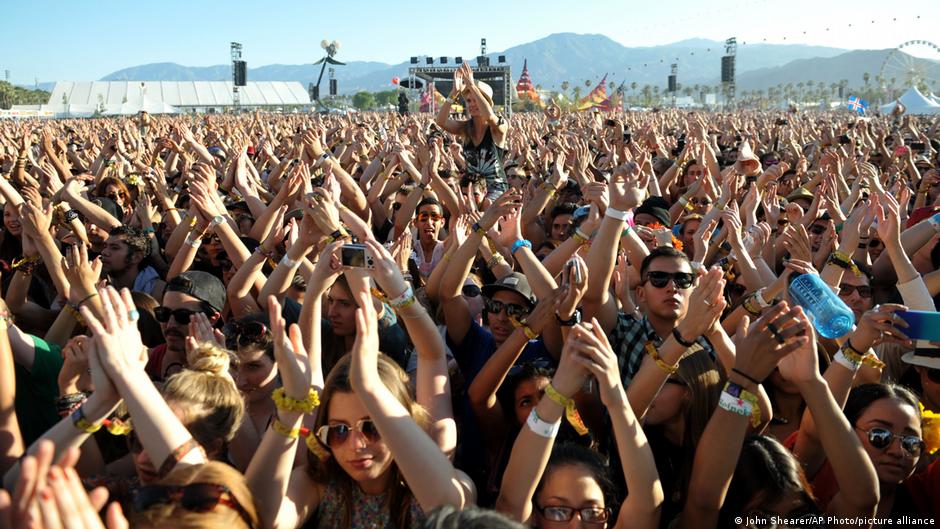
But two years later, Coachella returned on an annual basis, and for much of its 26 years it has been one of the biggest and most influential outdoor music festivals on earth. Around 125,000 people attend the event daily across consecutive three-day weekends. Coachella’s elaborate main stage has hosted pop and rock royalty from Beyonce to Madonna, Prince, Drake, Lady Gaga, Radiohead and Harry Styles.
This year, pop superstars Sabrina Carpenter and Justin Bieber will headline the 2026 festival, starting on April 10.
Influencers shift fan focus from music
In more recent Coachella festivals, social media influencers have been using the event to launch their own brands or fashion trends — while the actual performances take a backseat.
According to Variety magazine, which interviewed 100 festival goers in 2025, young people are drawn less to the music than the broader atmosphere. Some 66% of participants said they attended the festival, not for the music, but for the “experience” — especially the outfits.
The festival grounds have become a giant billboard for corporate brands to sell and promote their products, including Heineken, Amex and Neutrogena, which were particularly visible during last year’s event.
But festival goers are pushing back. According to UK online news site, The London Standard, a US survey found that 75% of respondents claimed that “Coachella’s musical purpose” has been “overshadowed” by influencers, while 68% of participants condemned the corporatization of the event.
These concerns were compounded by intense controversy surrounding the 2025 event, when logistical failures forced many festival-goers to queue for 12 hours to get in. There was also an inadequate number of portable toilets. It was also reported that singer Rihanna rejected a headline slot — as did rapper Kendrick Lamar, who said he was already booked, leading some to declare that the festival’s cultural capital may be spent.
Critics point to a lack of diversity
Critics have long scrutinized Coachella’s lack of artist diversity. The first time a Black female artist headlined the festival was in 2018, when Beyonce performed — nearly two decades after Coachella was founded.
At this year’s festival, Karol G will become the first Latina artist to headline the event. Meanwhile, it has long been speculated that a darker side underpins Coachella’s Instagram-friendly fun and glamor.
Back in 2018, it was reported that Philip Anschutz, the billionaire owner of the Anschutz Entertainment Group, which owns and operates Coachella, had donated money to anti-LGBTQ+ organizations, anti-abortion activists and climate change deniers. Anschutz denied the claims, calling it “fake news.” However, there were loud calls to boycott the festival by celebrities like English model, Cara Delevingne.
And while the Coachella festival is said to generate more than $100 million (€86 million) a year in revenue, the reality for thousands of Latino farmworkers in the region looks very different, with nearly 40% of them living in poverty, according to The Los Angeles Times.
But despite it all, the 2026 edition of the Coachella Valley Music and Arts Festival is again sold out.
Edited by: Jennifer Neal
