


For Gerald Wissel, founder and CEO of Hamburg, Germany-based aviation consulting firm Airborne Consulting, a recently announced ticket tax cut for airlines operating in Germany “won’t reach passengers” because it is “purely symbolic.”
“The state is giving up revenue, but passengers will not see any of the tax reduction,” Wissel predicted in an interview with DW.
Although airlines would save around €15 ($17.5) per ticket — potentially up to €50 in certain fare classes — dynamic pricing systems mean those savings are unlikely to show up on customers’ bills, he said.
Wissel argues a lack of aircraft, not fees, is driving airlines’ decisions to scale back services in Germany.
Low-cost carriers such as EasyJet and Ryanair have trimmed their networks because “they simply do not have the planes they need,” he said, adding that complaints about Germany’s high airport charges distract from the deeper structural issue.
Government cuts aviation tax burden — slightly
In November, the German government announced plans to roll back the aviation tax to its pre-May 2024 level, starting July 1, 2026 — a move anchored in the coalition agreement of the ruling alliance of the conservative CDU, its CSU sister party, and the Social Democrats (SPD).
Depending on route distance, the reduction will shave between just under €3 and nearly €13 off each ticket.
The aviation sector, which has long warned that Germany is pricing itself out of competitiveness, welcomed the step. Joachim Lang, CEO of the German Aviation Association (BDL), called it “an important signal” that ends “the years-long upward spiral in taxes and charges.”
State-imposed location costs would fall by around 10%, he said, while stressing that more relief will be needed if Germany is to benefit from Europe’s post-pandemic air travel boom.
Traffic recovery gathers pace
That boom is already visible in airport data. Passenger traffic across Europe rose 7.4% in 2024, according to industry association Airports Council International Europe (ACI), surpassing levels last seen before the COVID-19 pandemic for the first time. Germany, too, is seeing rising volumes.
Data compiled by the German Federal Statistics Office (Destatis) show 81 million passengers subject to aviation tax traveled in Germany last year — a steep climb from 62 million in 2022, but still below the 96 million recorded in 2019.
Tax revenue, however, has more than recovered, as income from the aviation levy has nearly doubled since its introduction in 2011, rising from €963 million to €1.88 billion last year.
“Aviation taxes have become a fixed part of budget planning not only in Germany but across Europe,” said Frank Fichert, expert on tourism and transport at Worms University of Applied Sciences in Germany.
The revenue typically flows into national coffers, he noted, which is why lowering taxes is possible, but must be “compensated elsewhere” — a tall order given strained government finances.
Aging fleets, soaring demand
While passenger taxes are “an important factor,” Fichert said they were “not the only factor influencing a location’s attractiveness.” Alongside taxes, airlines face mounting operational headaches, he added.
A recent report by aviation industry group IATA warns of a “record high” backlog (cumulative number of unfulfilled orders) for new aircraft of 17,000 planes globally.
“At present delivery rates, this would take 14 years to fulfil, double the six-year average backlog for the 2013-2019 period,” the report said.
The average age of the global commercial aircraft fleet has climbed to 15 years — the highest in aviation history — while the industry is also grappling with a long-term pilot shortage, the report added.
Wissel told DW that this crunch is hitting Europe’s budget carriers particularly hard. Ryanair has around 400 aircraft on order — 100 for replacement and 300 for growth. The same applies to EasyJet.”
Until those deliveries materialize, he argues, airlines will “concentrate precious capacity where profitability is highest.”
Airline cuts hit German airports
While the two budget airlines cautiously welcomed the German aviation tax cut, their strategies are already reshaping the market.
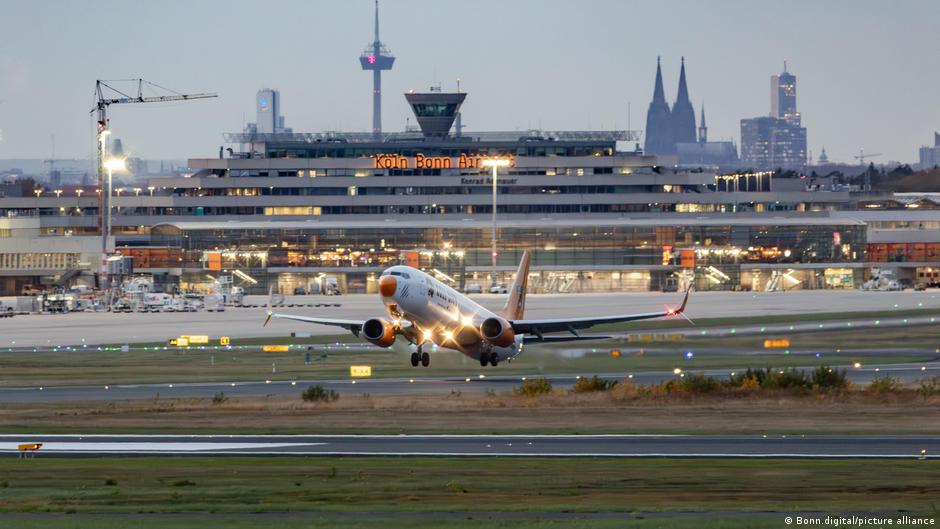
In January, Ryanair will cut 76 of its 246 weekly flights at Berlin and remove 44 routes from Cologne.
EasyJet plans to grow seat capacity in 2026 by just 2-4% — well below its group-wide target of around 7%.
Germany remains Europe’s largest aviation market — too big for major carriers to ignore. Wissel predicted that when the aircraft backlog has been resolved, “Ryanair will be back.”
“It won’t leave [German flag carrier] Lufthansa with the field to itself,” he added.
This article was originally written in German.
