



Want to bookmark your favourite articles and stories to read or reference later? Start your Independent Membership today.
Join today
Already a member?
Log in
It would be silly to suggest that Derren Brown made magic cool. No one has ever really managed to do this, and, to a large extent, I’m not sure the magic world even has any interest in being cool. It is an artform rooted in atavistic theatricality, and hard, nerdy graft: there’s nothing chic about it. But Brown has probably come as close as anyone when it comes to making magic – “or whatever it is that I do” he hedges, mostly describing himself as an illusionist – into a snappy, provocative mainstream pursuit.
During his ascent in the 2000s, Brown took the staid top-hatted conventions of magic and sawed them in half. His big breakthrough came in 2003, when he played – or seemed to play – a game of Russian roulette on live TV. In various other specials, he used elaborate psychological methods to compel strangers into believing that he’s the messiah reborn, into robbing a security van in broad daylight, into believing in an ongoing zombie apocalypse, and, in one instance, into an attempt to assassinate Stephen Fry.
“I came into TV as what they laughably called ‘talent’,” says Brown, speaking to me from his home over a video call. A jobbing stage performer at the time, Brown was recommended to Channel 4 by the comedian/magician Jerry Sadowitz, when producers wanted a mind reader to front a planned show called Mind Control. “I didn’t know anything about TV,” he recalls, “and so those first few years were me doing the sort of stuff I might do live anyway. Then, as time went on, this shift happened – making it more about other people, those kind of Truman Show setups where someone’s going through some nightmare they don’t realise they’re part of. That’s where the drama is.”
Brown sits in his house, his background automatically blurred. (As illusions go, it’s not one of his more ornate efforts.) He is now 55, but looks a few years younger: the top of his head is shaved, and he boasts a short, stubbly beard, replacing the arcane soulpatch-goatee that was once his go-to look. I’ve asked about Brown’s TV work in part because he’s keeping schtum on the specifics of what we’re nominally here to talk about: his latest stage show, Only Human. The show, which started touring last year and now resumes with a four-month residency at London’s Apollo Theatre, is Brown’s first since 2021, and concerns the matter of “being human”.
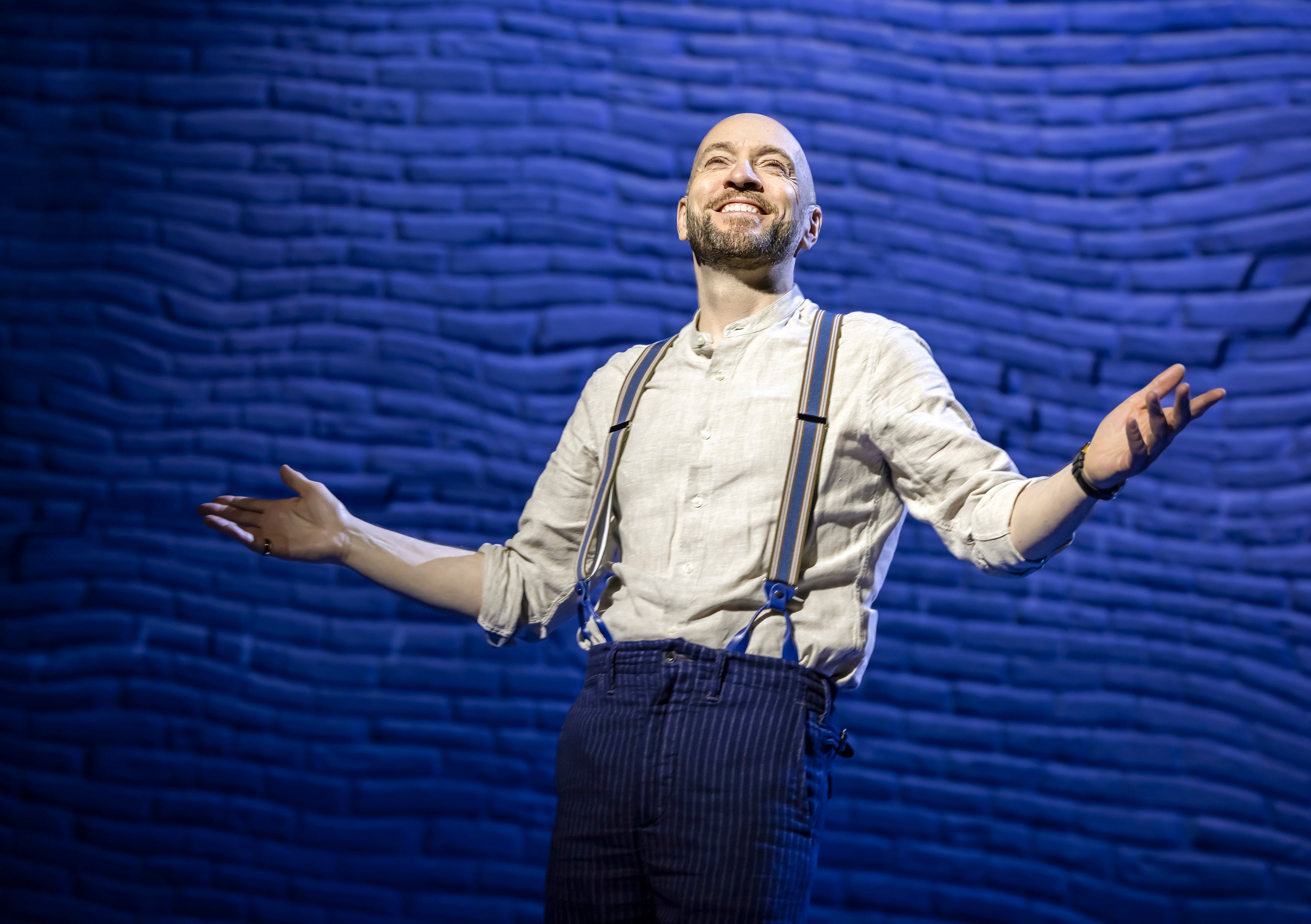
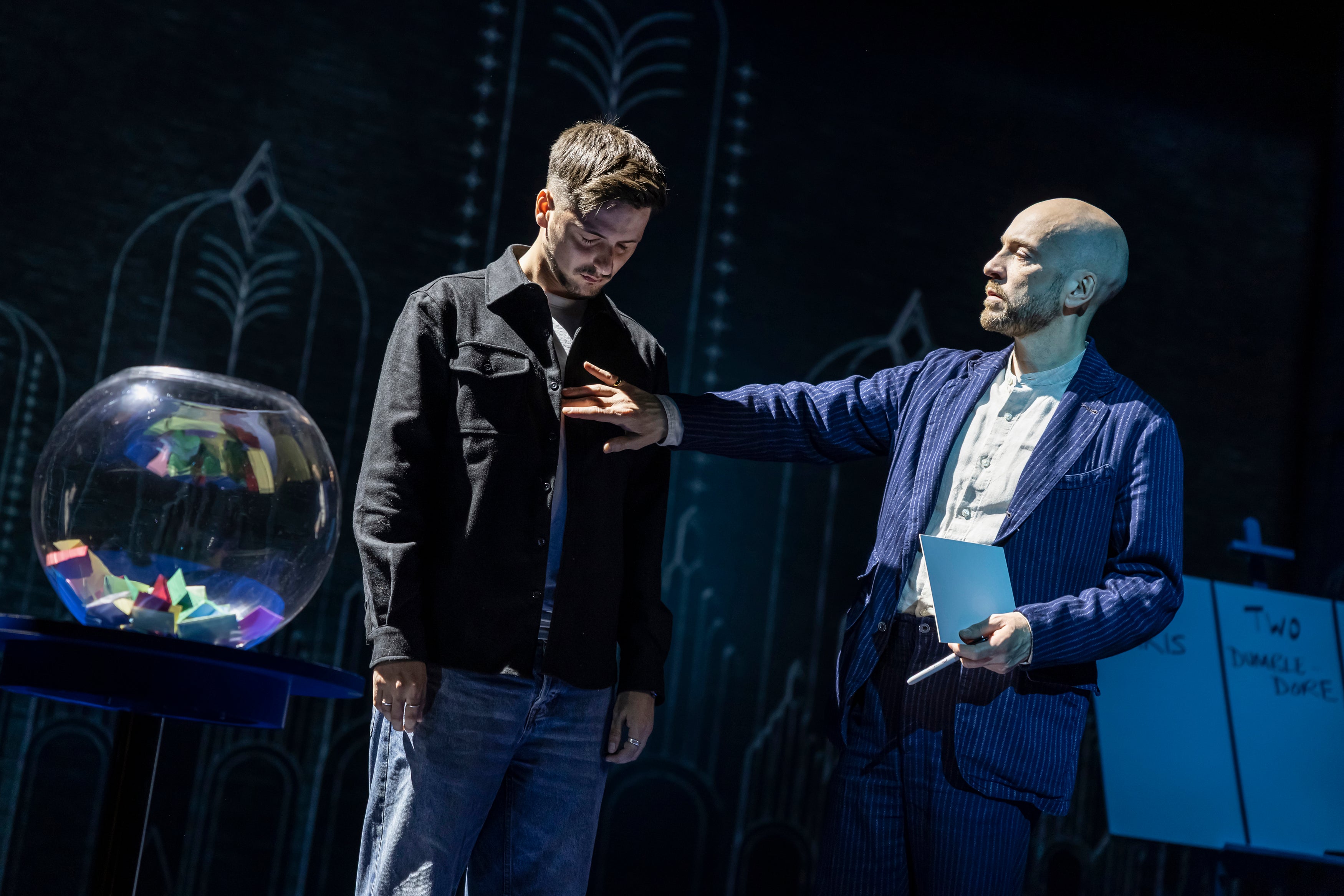
“It’s about how we need to try and predict, and control our lives,” he says. “How we navigate that in an uncertain world. I would hope people leave with a greater sense of wonder about themselves and, and the world around them.” Every night, he swears the audience to secrecy when it comes to the content of the show. It’s an embargo they opt to obey.
Mostly, that is. The age of the internet has brought novel obstacles for magicians, with entire Reddit forums devoted to unpacking and de-mystifying the details of any popular illusion. The notion of an illusion comprehensively “fooling” an audience seems almost impossible now; the internet has made us, as it were, fool-proof. “But I don’t really know if that’s relevant, if you’re doing a good job,” says Brown. “There was a genuine technological watershed moment for magicians, I think, once people could start video-taping TV shows, and they could pause, and rewind. That was a game changer. And on the internet, there is that wisdom-of-crowds thing, where people can all get together and analyse it between them.”
When it comes to those online autopsies, Brown says he avoids even looking at them. “I’m sure people arrive at conclusions that are maybe right, or half-right or just plain wrong. I just never go there,” he says, “because it’s depressing and frustrating.”
I think if you become a big name overnight, it can be horrendously disorienting and destructive
Derren Brown
To some degree, the problem is more philosophical than practical. We live lives inundated not just with information, but spurious information; in the age of AI, distrusting the reality of what you are being shown has become a part of everyday life. When it comes to illusionism, there is, I suppose, simply so much more disbelief to suspend. “It feels, in our modern world, that wonder would come to mean less,” says Brown. “But the reality is that access to this information just exacerbates our need for wonder.
“The point of things like wonder and mystery is that they exist outside of what is ordinary. If you are fooled by a trick, you are being shown that your story – your understanding of what was going on – doesn’t quite match up to reality. And that is, of course, a very helpful lesson in navigating life, even though magic itself is such a sort of childish thing. At the heart of it, it says something valuable.”
Brown gives the impression of thinking deeply about what he does, a quality that tends to shine through is his work. A Derren Brown trick is seldom just an illusion, but an illusion that’s trying to communicate something larger. “I think we have a bad relationship to mystery, in the West,” he continues. “We don’t live it; it’s not part of life. We take it and put it into places where it feels a lot less mysterious.” It’s a culture that manifests, he says, in our default preference for “secular stage magic” over more traditional woo-woo mysticism.
“We put [our sense of mystery] in the way we talk about the unconscious, or the way we talk quantum physics,” Brown says. “We package it up and put it in these bottomless wells where we don’t have to think about it. But we’re still going to need to find it somewhere. We all want to. People like me become one way of doing that. Or you might look for that in religion. Or, in money and fame, which is a bad place – it doesn’t supply it. There’s a human urge to transcend ordinary life. If we don’t take it seriously then we put it in all the wrong places.”
What of Brown’s own relationship with fame? The illusionist seems unusually well-adjusted for someone of his celebrity. Interviews often mention how nice he is off-camera, disrobed of his slick, confident, faintly austere stage persona. And to be fair, this seems genuinely accurate – no illusion required.
Born in Croydon and raised in nearby Purley, Brown benefited, perhaps, from the gradualness of fame’s arrival: before Russian Roulette set him on his way to becoming a household name, he had been working for three years on the significantly less-watched Mind Control, after years in the Nineties as a close-up magician in bars and restaurants.
“I was in a very small pond for a long time – there weren’t many people doing the sort of thing I do, back when I started doing it. I got well known slowly – slow enough to keep up with and climatise to the weirdness that was coming through,” he says “I think if you become a big name overnight, it can be horrendously disorienting and destructive, particularly if you’re young. And I wasn’t that young. I was 30, but if you’re young young, that’s just cruel.
“I am,” Brown adds, “blessed with a complete lack of ambition, and that really helped. I never wanted to ‘crack America’. All I’m driven by is whether it’s a fun thing to do”
Brown has always been relatively circumspect when it comes to discussing his personal life in public. In 2007, he came out as gay. His career in magic partly played into “the classic cliche among people of my generation… of the gay man being a fashionista, or an interior designer, or a hairdresser, or an actor: they’re all about these dazzling surfaces.” When he was younger and in the closet, the dazzle and distraction of illusionism was a way of channeling his own insecurities about his sexuality – “but I think I’ve worked that stuff through, as much as I can” he says. “I don’t feel it’s a driving force with the shows [anymore].
“I’m much more interested now in a different question,” he continues – how to communicate something honest and worthwhile via the “essentially dishonest” medium of magic. “As opposed to: How do I deflect? How do I look cool? How do I circumnavigate all the things that are uncomfortable in my life? I don’t think that anymore,” he says. “So that’s just happened as I’ve grown up.”
Brown is, he adds, “quite an avoidant sort of person. I avoid things that look like they’re going to feel stressful. I don’t do very much. You never see me on things like chat shows, or panel shows. And it’s partly because I like to be right in the middle of my comfort zone. Plus, I like the fact that I’m not oversaturated on TV and I’m not in everyone’s faces all the time.”
At some point soon, Brown will nonetheless be back on television, with a new series called Incognito. The series will feature a group of people tasked with uncovering each others’ identities, while trying to keep their own identity private. Channel 4 is billing it as “a mischievous psychological experiment”. Very Derren Brown, in other words.
‘Only Human’ is at London’s Apollo Theatre from Saturday 10 October 2026 until Saturday 30 January 2027
