


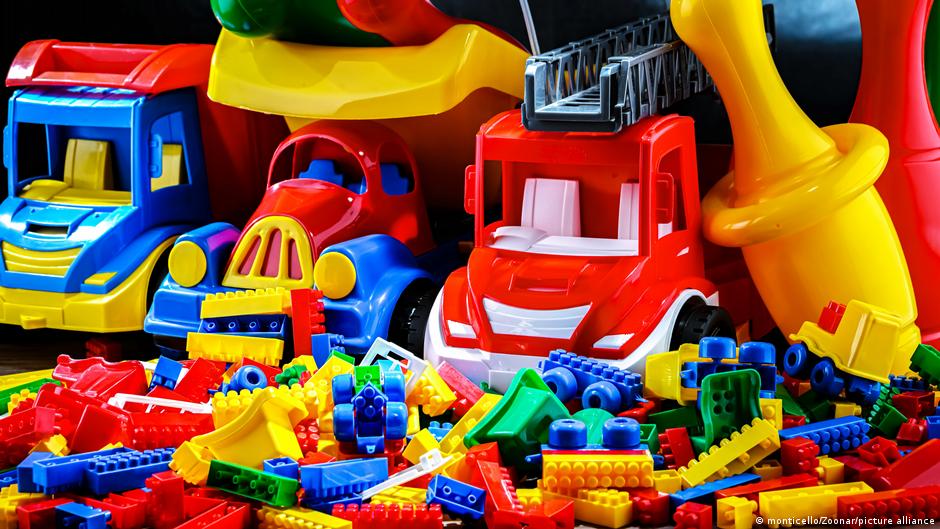
It’s that time of year again, when children in countries that celebrate Christmas all over the world are dreaming of what awaits them in brightly wrapped packages — everything ranging from model cars to plastic building blocks, dolls and so much more.
Yet the German Society for Endocrinology, a specialist society for researchers studying the effects of hormones, warns that many children’s toys contain endocrine disruptors, which can have a negative impact on metabolic processes, growth, brain development and fertility.
Endocrine disruptors (EDCs) are chemicals that, even in small quantities, can disrupt the way hormones function, and cause harmful effects. EDCs include plasticizers such as phthalates and bisphenols, which are found in a variety of food packaging. They also include brominated flame retardants, which make plastics less flammable, so-called forever chemicals (PFAS), as well as heavy metals such as cadmium and bromine.
Harmful substances put children at risk
These substances can be found in all kinds of everyday household items such as cosmetic products, plastics, paints and textiles, but also in cheap children’s toys, said Josef Köhrle of the Institute for Experimental Endocrinology at Berlin’s Charite university hospital. He researches how different substances affect the body’s hormone systems.
“Children’s skin and mucous membranes are not yet fully developed as barriers to harmful substances,” said Köhrle during a press conference earlier this month.
What’s more, young children explore the world with their mouths. This typical behavior “can massively increase EDC exposure,” the researcher warned.
EU aims to address lack of regulation
EDCs are identified as substances of very high concern in the EU, considered just as dangerous as carcinogenic or mutagenic substances such as asbestos. And yet EDCs still end up in toys for children.
Köhrle believes the oversupply of “cheap products” not manufactured in accordance with EU standards is to blame for this problem. Online retail platforms such as Amazon, Shein and Temu contribute to the widespread distribution of such goods because compliance with EU guidelines is not sufficiently monitored and enforced, he said.
The European Parliament has, however, reacted to this situation and adopted new safety regulations for toys.
“The EU is leading the world in trying to introduce and enforce regulatory standards for products and chemicals,” said Köhrle.
Yet cheap and potentially harmful toys will still be on offer for the time being.
“According to optimistic estimates, it will take at least four and a half years before this decision [on new safety regulations] is implemented,” said Köhrle. This is partly because every EU member state is responsible for protecting the health of its own population.
How can you avoid dangerous toys?
A few tips to limit exposure:
- If plastic toys have a strong chemical smell, consider ditching them.
- Textiles should be washed before they are gifted to a child.
- Products from well-known brands are likely the best and safest bets.
To date, there are no reliable EU-wide labels that certify a product being safe and compliant with EU standards. New EU safety regulations will require toys to have a digital product passport, allowing authorities and consumers to check whether the item is safe.
Until then, choosing safe products remains an individual responsibility. A look at the European recall database can help avoid dangerous products in the first place.
Gift givers should also avoid old, used plastic toys. This is because there is a risk of EDCs leaching from worn or damaged surfaces, explained Köhrle. Older plastic toys may also contain substances that are now banned.
“Many EDCs are very persistent, and known as ‘persistent organic polluters,'” said Köhrle. That’s why he is urging authorities to act and implement tougher checks and bans.
This article was originally written in German.
