


The Nürburgring in the Western hills of Germany is the world’s longest permanent race track. It’s almost a century old and was the site of many Formula One Grand Prix races.
The track’s main part is called the Nordschleife, or the Northern Loop. The 20.8-kilometer (12.9-mile) track is nicknamed the “Green Hell” — because of the surrounding forests of the Eifel region, and its punishing layout.
To understand the importance of engineering and performance in German carmaking, the Nordschleife is a good place to start, said Misha Charoudin, car racer and influencer.
“If a car can do a good lap time here, it means all the components work: suspension, tires, engine, chassis, and of course also the driver itself,” he said, while barreling through a corner at 190 kilometers per hour (118 miles per hour). “It’s better than a roller coaster.”
Testing at the race track
All the big carmakers have test centers at the Nürburgring, he said. In fact, the testing of cars was an important reason for building the race track in 1927.
Germany’s auto industry has used this legacy, and the no-speed-limit Autobahn, Germany’s public highway system, to its advantage in advertising and brand building.
Brands like Mercedes-Benz, BMW, Audi and Volkswagen stood for precision engineering, performance and reliability. They weren’t just cars — they were cultural icons, and the backbone of Germany’s economy.
But today, that magic is fading.
Lost Wunderland
Germany’s auto industry employs over a million people and has long been a barometer of economic health. In 1950, German car makers sold about 200,000 vehicles. Today, they sell around 14 million globally. For decades, the formula was simple: world-class engineering plus global demand equaled success.
But the good times are over. Sales are shrinking, jobs are being cut and factories face closure. “The pressure rises, the cost savings are tremendous,” said one Mercedes employee, who wished to remain unnamed. “It’s all about cost cuts everywhere.”
The first cracks appeared in 2015 with Dieselgate, when Volkswagen was caught cheating on emissions tests. The scandal cost VW more than €30 billion ($35 billion) and shattered trust in German brands. Worse, it coincided with a global pivot toward climate-friendly technologies. While Tesla doubled electric car sales, German manufacturers hesitated.
China: From gold rush to lost ground
For years, China was the promised land. In the 1980s, China’s political leaders invited Volkswagen (which in German translates to “car of the people”) to form joint ventures and build cars in China, for China’s people. There were times when Volkswagen’s market share approached 50%.
Later, other carmakers followed suit. The more China’s economy grew, the bigger the country’s car market became. Until a few years ago, Germany’s car makers sold every third car in China.
“It was gold digger time,” recalled Beatrix Keim, who spent two decades with VW in China and is now a director at CAR, an industry consultancy in Duisburg. “Selling lots of cars, earning lots of money. There was not much of a Chinese competition.”
China’s chance to overtake German carmakers
But China had a plan: learn from foreign partners, then lead. In 2009, Beijing passed to law to pushelectric vehicles. “It was not really driven by climate change,” Keim explained. “It was to find a technology where China had a chance to overtake the foreigners, where China could thrive.”
German carmakers didn’t see this coming, she added. They had underestimated the determination of China’s leadership, and the speed of development.
Billions in subsidies and infrastructure later, China is now the world leader in electric vehicles and batteries.
“Starting with EV, they had the once-in-a-lifetime chance to overtake Germany. And they did,” said Manuel Vermeer, who teaches Chinese culture and business at the University of Applied Sciences in Ludwigshafen.
Today, every second car sold in China is electric — and almost all are Chinese brands. German sales have tanked in their most important market.
“I think it has a lot to do with arrogance”, said Vermeer. “I’ve been conducting intercultural trainings for Germans regarding China for more than 30 years. And the German point of view is always: We are superior, how can we teach them what to do, they should learn from us. But hardly ever was it something like: We could learn from them, we should listen more, or maybe they are different from what we think?”
And Germany depends on China for batteries. “Even if we build very good EV cars, we’d still need the batteries from China,” said Vermeer. “We are more dependent than we used to be.”
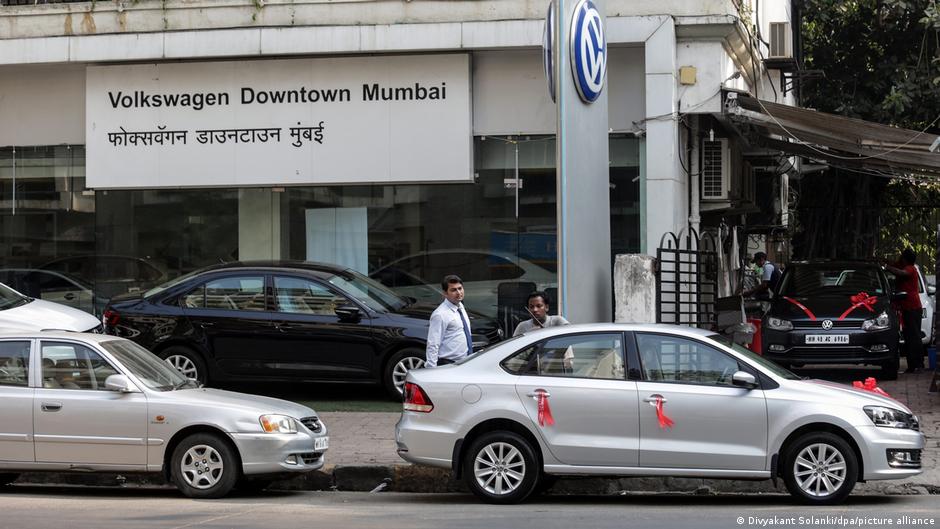
With China slipping away, attention is turning to India, now the world’s most populous country. Could it be the next big thing?
Can India fill the gap?
If you watch the dense traffic in Chennai, a city in India’s southeast, you rarely spot a German car. Indian, Japanese and Korean cars dominate the streets of the city that is often called “India’s Detroit,” due to its many car factories.
BMW’s Chennai plant produces just around 80 cars a day, compared to 1,400 at the carmaker’s German flagship. Still, growth is strong — over 10% annually.
“There’s a big rush to the Indian market,” said plant manager Thomas Dose. “Everybody feels like: if we are not in India now, we’ll miss some opportunity.”
But Dose is realistic. “Is India the new China? I would say no. It’s India, it’s different. It has its potential. But we will not have this extensive growth like in China.”
Experts agree. India’s market is promising, but German carmakers face cultural hurdles. “We want to sell the best cars in the world,” said Vermeer. “But that’s over-engineering. In India, being at 80% works — get feedback, adapt. Our sense of ‘perfect’ is not the best thing for this market.”
Lessons learned — or too late?
Beatrix Keim believes German carmakers are trying to change. “They understood they need to be faster, come down from their ivory tower and learn,” she said.
Meanwhile, the race for building successful electric vehicles is in full swing. In China, local EV manufacturers are struggling with overcapacities and falling prices. They are also trying to sell their EVs in Europe, so far with moderate success.
But EV carmakers from China and elsewhere are testing their cars on Germany’s own Nürburgring, a symbolic twist in a story of lost dominance.
Could German carmakers miss the boat entirely? “It can happen,” said racing Misha Charoudin. “Look at [Finnish mobile phone maker] Nokia. They were thriving. And then all of a sudden, they missed the boat.”
Want the full story? Listen to DW’s new podcast series: Delayland: Germany and the Missing Magic
Also on Apple Podcasts, Spotify, Youtube or wherever else you get your podcasts.
