


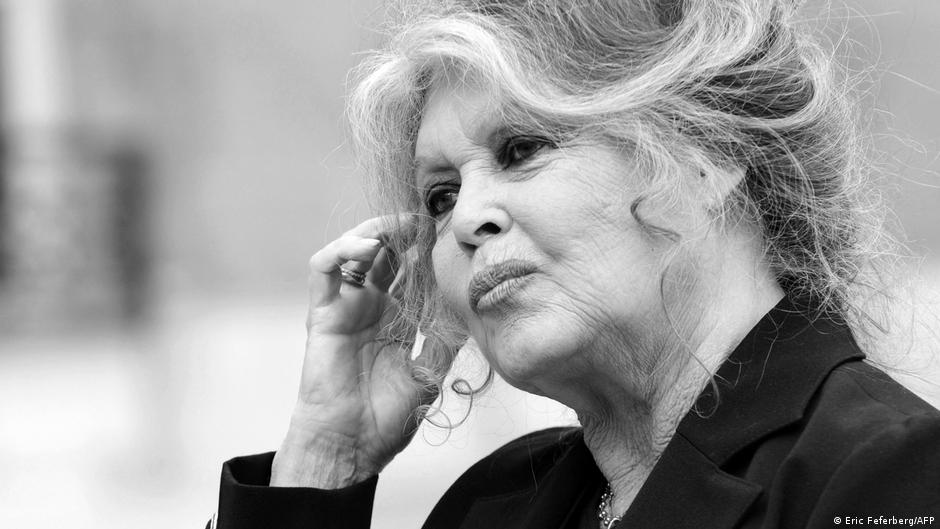
An icon of French cinema and one of the country’s most famous stars, Brigitte Bardot has died at the age of 91.
Often referred to simply by her initials, BB was considered both a feminist and a femme fatale — but controversy also became a recurring theme of her life.
Born the daughter of an industrialist in Paris on September 28, 1934, Brigitte Bardot was discovered as a model at the age of 15. She became even more sought-after once she had dyed her brunette hair blonde, making her one of the most famous “blondes” of the 20th century, not unlike Marilyn Monroe.
Well into the 21st century, fashion magazines celebrated “BB blonde” as the perfect shade of blonde.
An icon of sexual liberation
Bardot started appearing in films at age 18, but international interest was first piqued in Roger Vadim’s 1956 romantic drama And God Created Woman, in which she portrayed a liberated young woman in a respectable beachside town.
In the US, the film was deemed too shocking to be screened; some theater managers who showed it were arrested. But that helped rather than hindered the movie’s success, and Bardot became an international star.
She went on to star in more than 40 films, including Jean-Luc Godard’s Contempt (1963), Henri-Georges Clouzot’s The Truth (1960) and Louis Malle’s Viva Maria! (1965).
Bardot also recorded many popular songs in the 1960s and 1970s, collaborating with the likes of Serge Gainsbourg and Sacha Distel.
As a fashion model, she was a muse for great designers including Dior, Balmain and Pierre Cardin. Her numerous love stories and affairs never failed to make headlines, and she became an icon of the sexual liberation of the time.
In her 1959 essay, “The Lolita Syndrome,” Simone de Beauvoir described BB as a “locomotive of women’s history” and declared her the most liberated woman of postwar France.
Bardot retired from acting in 1973, but remained a major star throughout her life. From 1969 to 1978, she modelled for the official busts of Marianne, the national symbol of the liberty of France.
From acting to animal welfare
Instead of acting, she increasingly used her international fame to campaign for animal rights and protection, which was to become the main focus of the later part of her life.
Among other things, she urged the introduction of bolt guns in slaughterhouses to kill animals with as little pain as possible.
In 1976, she joined a global campaign against seal hunting. Then in 1986, she founded the Brigitte Bardot Foundation, which still campaigns for animal welfare worldwide.
Drift to the far right
Later in her life, she made headlines for what were alleged to be racially insensitive statements, and was fined many times by French courts for inciting racial hatred against Muslims or native Indian Ocean islanders.
In 2012, Bardot emerged as an ardent supporter of France’s far-right presidential candidate, Marine Le Pen, at one point calling her “the Joan of Arc of the 21st century” who would “save France.”
Bardot also repeatedly spoke out on gay rights and gender issues, though she denied being homophobic, saying she had many homosexual friends.
At the same time, she blamed the number of gender reassignment surgeries for skyrocketing health care costs.
During the #MeToo debate over sexual harassment in the movie business, she said many actresses “tease” producers to land a role. “And then they say they were harassed so we’ll talk about them,” she said.
But despite her many controversial statements, Brigitte Bardot’s iconic status will remain firmly anchored in pop culture history.
This article was originally written in German.
